
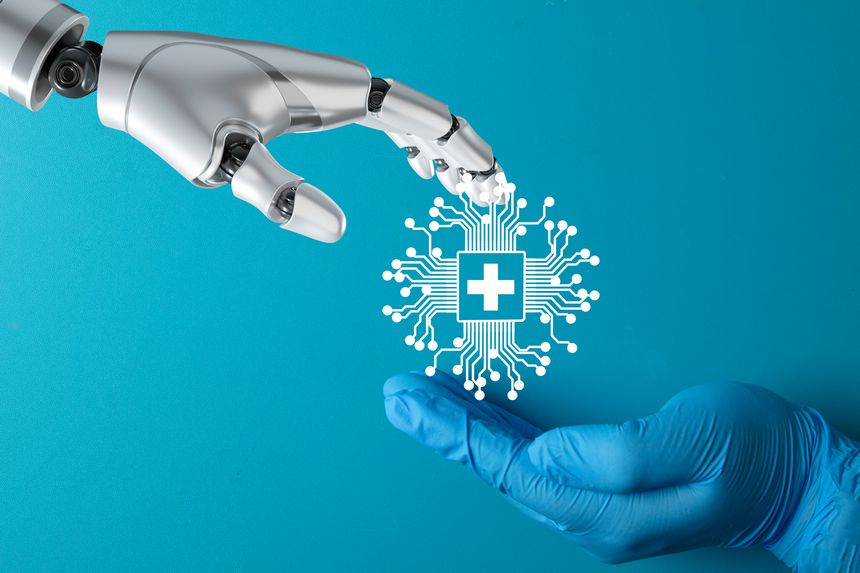
A recent report, launched by the International Telecommunication Union (ITU), the World Health Organization (WHO), and the World Intellectual Property Organization (WIPO), provides practical guidance for innovators developing AI-enabled healthcare technologies.
The report explores how intellectual property (IP), commercialisation strategies, regulatory approvals and health data governance work together to transform innovative ideas into scalable healthcare solutions. A key message is that successful AI-health innovators do not rely on one single type of IP; they build integrated IP strategies that evolve throughout the innovation lifecycle.
The report outlines that AI-driven healthcare innovations such as diagnostics, medical devices, imaging systems and drug discovery platforms, require a combination of patents, trade secrets, copyright, contracts and licensing strategies. Patents can be used to protect technical inventions such as algorithms, model architectures and medical devices, while trade secrets are often more effective for protecting valuable datasets, model weights, training methods and operational know-how. Copyright can be used to protect software code, documentation and databases. Successful innovators carefully determine which assets to patent, which to keep confidential and where collaboration can accelerate growth.
The report emphasises that IP strategy should be aligned with regulatory strategy from the outset. Regulatory clearances from bodies such as the FDA, CE authorities or national regulators do more than permit commercialisation; they significantly increase enterprise value, attract partners, de-risk acquisitions and strengthen market credibility. Several case studies demonstrate that regulatory approval often acts as a multiplier of the value created by IP assets.
The report also highlights the growing importance of data governance. Health data is subject to strict privacy and regulatory requirements, requiring innovators to balance AI development with compliance obligations. Techniques such as federated learning allow organisations to collaborate and train AI models without sharing raw patient data, creating both a privacy advantage and a competitive differentiator.
The report also provides interesting insights into commercialisation pathways. Flexible licensing models including field-of-use licensing and geography-based licensing can simultaneously serve public health goals in resource-constrained settings and commercial objectives in high income markets. Cloud-based delivery can be used to expand access while protecting core technology.
Key takeaways for innovators:
- Use a mixed IP strategy. The most successful AI-health companies combine patents, trade secrets, copyright and contractual protections rather than relying on a single form of IP.
- Protect data and know-how as well as inventions. Proprietary datasets, model weights, validation methods and operational expertise are often at least as valuable as the algorithms themselves and may be better protected through trade secrets.
- Think about IP early. Decisions made during ideation, development and validation can have long-term consequences for ownership, patentability and commercialization.
- Align IP and regulatory strategies. Regulatory approval can substantially increase valuation, partnership opportunities and acquisition potential. The report emphasizes that IP and regulatory planning should run in parallel.
- Manage data governance carefully. Compliance with health-data privacy laws is not only a legal requirement but a critical factor influencing freedom to operate and scalability.
- Structure licensing strategically. Field-of-use and geography-specific licensing can expand market reach while preserving competitive advantage and supporting public-health objectives.
- Build for scale. Strong IP portfolios, clear ownership rights, robust contracts and regulatory credibility make companies more attractive to investors, acquirers and strategic partners.
Subscribe to receive more articles like this here.
“The real challenge is not whether AI can generate new ideas for health, but whether those ideas can become safe, trusted and widely accessible solutions ... Intellectual property and meaningful technology transfer are central to that journey.”

/Passle/6130aaa9400fb30e400b709a/SearchServiceImages/2026-10-15-13-59-24-760-6ad0dc3caa6596dee349c576.jpg)
/Passle/6130aaa9400fb30e400b709a/SearchServiceImages/2026-10-15-09-22-55-529-6ad09b6f294f5d4c2d2ceea7.jpg)
/Passle/6130aaa9400fb30e400b709a/SearchServiceImages/2026-10-14-14-46-12-016-6acf95b46432c6c1a4f4c47a.jpg)