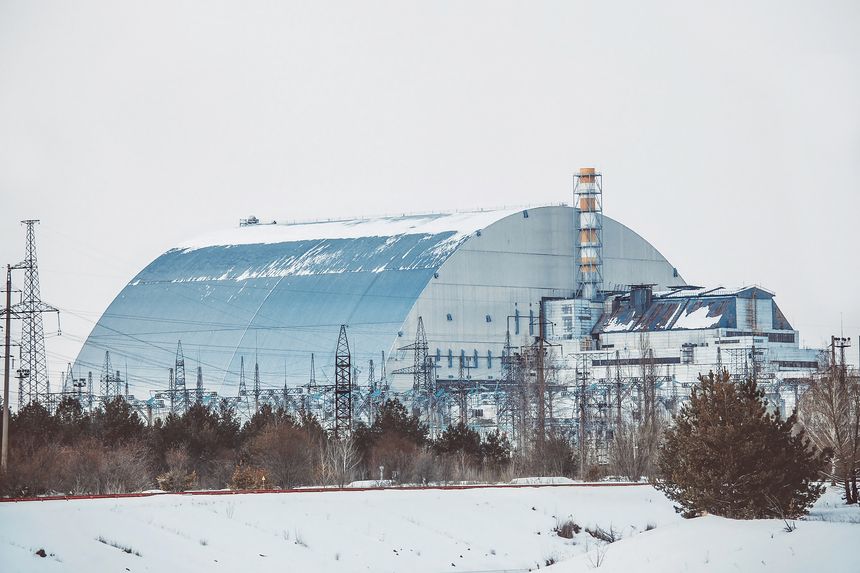
Sunday marked 40 years since the disaster at Chernobyl, generally regarded as the worst nuclear accident in history. Reactor 4 of the Chernobyl Nuclear Power Plant exploded in the early morning of 26 April 1986. The UK public reacted to the accident with a greater opposition to nuclear energy [1]. 40 years on, how has the landscape changed?
Nuclear energy is still causing division. However, since 2022, support for nuclear energy in the UK has risen with approximately 50% of Britons in favour [2]. Additionally, opposition to nuclear energy has decayed, with 30% of Britons against [2]. Nevertheless, the last few years have seen a significant increase in demand for nuclear solutions. Projections from the International Energy Agency (IEA) show global electricity demand will more than double, from 415 TWh in 2024 to 945 TWh in 2030. Recent events have also led to rising oil prices, fuelling the desire for oil-free energy.
How safe is nuclear energy? Whilst the nuclear accidents at Chernobyl and Fukushima strike fear, the data suggests this shouldn’t be so. Depending on your source of data, coal energy causes over 800 times as many deaths as nuclear per terawatt hour. For reference, a terawatt hour is the annual consumption of approximately 150,000 people in the EU. What all data sources agree is that fossil fuel energy causes more deaths than nuclear, by a wide margin. For further reference, nuclear energy fatalities are comparable to those of wind and solar. Perhaps we shouldn’t be so fearful after all?
The exponential growth of AI has led to a chain reaction in which the demand for data centres has soared, putting significant strain on power grids. Nuclear energy’s ability to provide a stable power supply with high reliability and low carbon dioxide output has led it to become a forerunner for powering data centres. Data centre owners, such as Microsoft, Amazon, and Meta have invested heavily in nuclear energy. One of the core problems preventing further adoption of nuclear energy is the time taken to build new reactors, which currently stands at around 6–7 years. Small modular reactors (SMRs) can help moderate this problem and, combined with their small size and lower cost, have thus generated a large amount of attention in recent years.
Earlier this month, Rolls-Royce SMR signed a contract with Great British Energy – Nuclear (GBE-N), a government-owned company supporting the UK’s nuclear industry, to allow Rolls-Royce to start delivering three SMRs at Wylfa (North Wales). Each SMR power station is expected to generate 470 MWe [3] – enough to provide electricity to 1 million homes.
Rolls-Royce SMR currently has 36 published patent applications, of which 8 were filed last year. Rolls-Royce SMR shows a strong IP strategy: 5 of the applications filed last year relate to valves for nuclear reactors – all filed on the same date – and this is a pattern shown repeatedly throughout their filings.
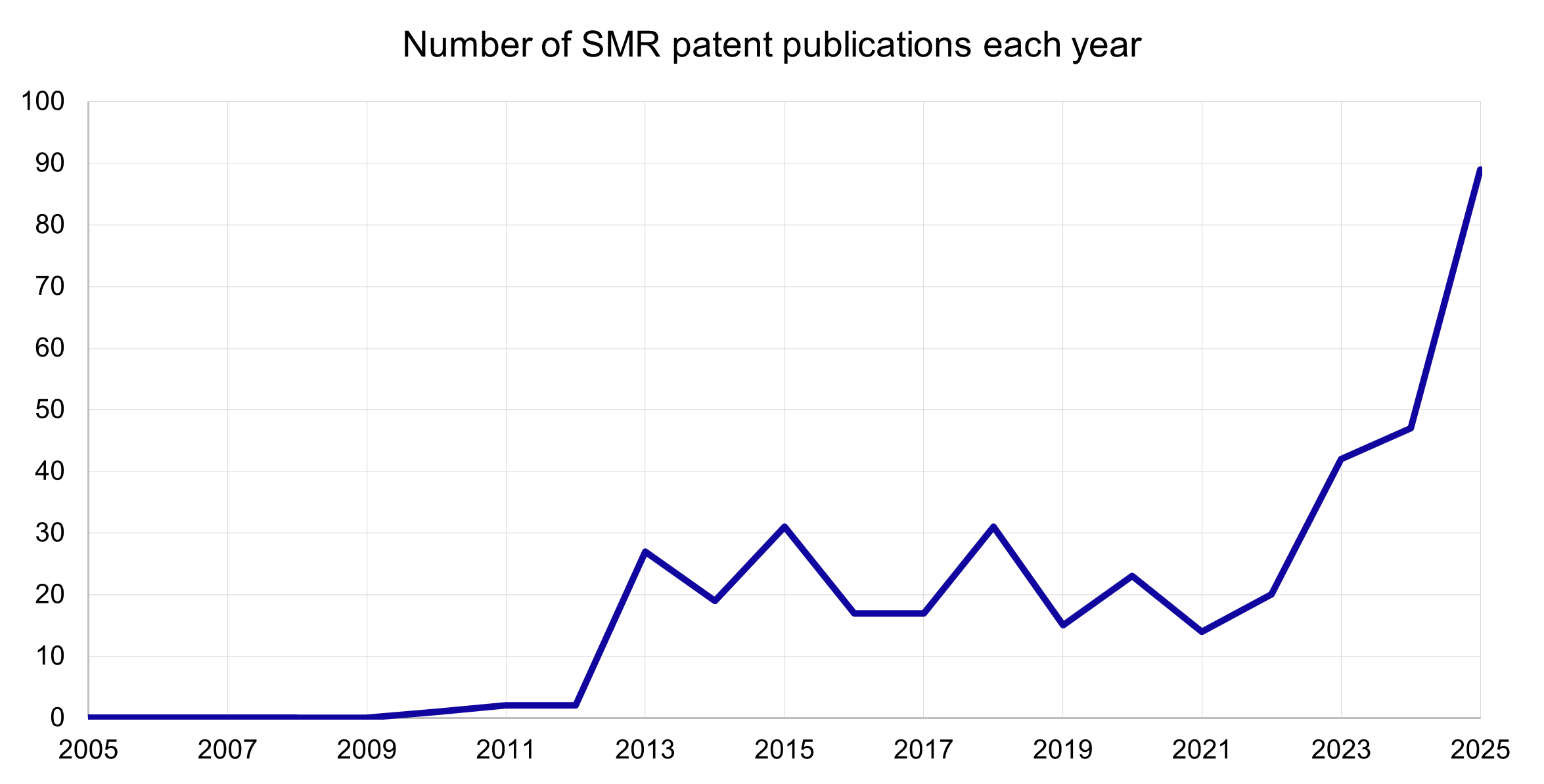
*Source: Data published on Espacenet
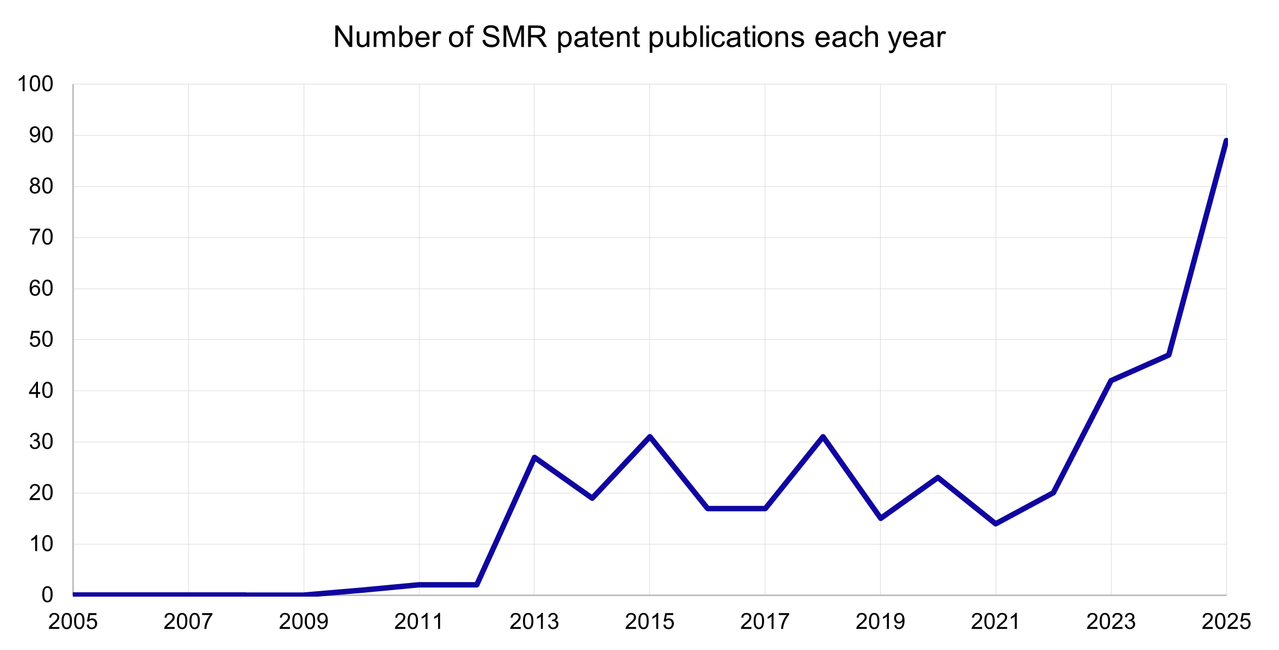
Rolls-Royce are not the only ones filing patents for SMRs. The interest in nuclear energy has been reflected in patent filings. The graph above shows, in the last three years, publication of SMR patent applications has peaked [4]. This year, so far, 24 SMR patent applications have been published. It will be interesting to see if this year yields more than the threshold set last year.
[1] J.R. Eiser et al. “Nuclear attitudes before and after Chernobyl: change and judgment”, Journal of Applied Social Psychology (1989)
[2] https://yougov.com/en-gb/articles/54612-how-do-britons-feel-about-nuclear-energy
[3] https://gda.rolls-royce-smr.com/our-technology
[4] Created using data from Espacenet

/Passle/6130aaa9400fb30e400b709a/SearchServiceImages/2026-10-08-08-54-19-301-6ac75a3bd24614eebffad63d.jpg)
/Passle/6130aaa9400fb30e400b709a/SearchServiceImages/2026-10-08-09-03-22-078-6ac75c5aef19e2775edf9165.jpg)
/Passle/6130aaa9400fb30e400b709a/SearchServiceImages/2026-10-07-13-35-08-676-6ac64a8c3724c91c5285d065.jpg)