
This article was prepared with assistance from our summer student Elan Foorer.
A good brand collaboration (collab) can turn an ordinary launch into a home run moment that people line up for, post about, and remember. Modern commerce abounds with examples of interesting collaborations that create viral moments and extend market reach into new areas and place brands and products in front of different groups of consumers.
Behind the excitement are practical questions that might not be readily apparent:
What legal impact can the collab have on the brands and trademarks of each collaborator?
Is an intellectual property (IP) licensing agreement required, and if so, on what terms?
Who owns any jointly developed IP including collab brands, and
How will each brand stay distinctive?
For Canadian brand owners, a clearly drafted written licence is important to maintain validity and preserve trademark ownership and distinctiveness of licensed marks and is also strongly advisable when licensing copyrighted works. Put simply, properly drafted licenses can be fundamental when permitting use of trademarks, artwork, or other assets for exciting and noteworthy collaborations.
Why do brand collabs keep working? What about IP?
Brand collaborations give people something they could not get from either brand alone. A familiar logo appears in a new setting, a digital character moves onto a physical product, or established businesses combine their identities in a limited release.
That mix can create real excitement for consumers and fans. It can also create IP issues. In many co-branding projects, trademarks are the key asset. A trademark can be a word, logo, design, shape, colour, sound, or other sign that helps consumers identify the source of goods or services.
A “licence” is the legal mechanism that permits one party to use another party’s trademark without transferring ownership. Because those brand elements often drive the collaboration, the licence should set clear limits on how they may be used. It is essential that any trademark license mandate that the trademark owner exercise direct or indirect control over the character and quality of the associated goods and services, among other important terms and conditions. The trademark owner should actually exercise such control. It is best practice to ensure that all trademark licenses are reduced to writing in a formal agreement.
OVO x MLB Franchise collab blends famous brands & personalities
In August, October’s Very Own (OVO) – Toronto-based musician Drake’s signature label – and Major League Baseball (MLB) launched OVO x MLB 2026, a collab featuring MLB and franchise branding displayed on OVO designed, approved and branded clothing with a stylish streetwear aesthetic. The collection features branding for Toronto’s (and Drake’s) favourite baseball team, and recent World Series finalists, the Toronto Blue Jays, as well as pieces branded with trademarks from the LA Dodgers, New York Yankees, Houston Astros and the Chicago White Sox. The OVO x MLB 2026 collection is available via OVO’s online store. The collection brings together OVO and MLB and seeks to bridge the gap between music, sports, fashion and urban/street experience in a way that resonates with fans and enthusiasts of each potentially expanding the audience and market for both OVO and MLB products.
The collaboration involves several Canadian trademarks such as OVO (reg no. TMA912211), “OWL Design” (reg no. TMA901528) and OCTOBER'S VERY OWN (reg no. TMA896236) owned by Drake’s business, and MLB and franchise trademarks including MLB (reg no. TMA859967), TORONTO BLUE JAYS (reg no. TMA276539), TORONTO BLUE JAYS & DESIGN (reg no. TMA277395), CHICAGO WHITE SOX Design (reg no. TMA337286), “LA Design” (reg no. TMA337262), YANKEES (reg no. TMA727651), and “NY Design” , among others.
 “OWL Design” |  TORONTO BLUE JAYS |  “LA Design” |  “NY Design” |
The OVO x MLB 2026 campaign illustrates how one collaboration project can bring together several layers of IP. For OVO to use the MLB and franchise partners’ names, logos, and other brand elements on apparel and accessories, it would generally need permission from the relevant brand owners via a formal trademark licence. OVO’s own trademarks are also used alongside the sports brands on merchandise, while the collection itself incorporates logos and designs that are subject to copyright (as we are all trademarks), which would require a copyright license.
A collaboration of this kind may therefore require several separate and distinct licenses or permissions for trademarks in respect of the collaborator’s brands, and copyright in respect of artwork, product images, and campaign materials used across merchandise, stores, e-commerce, social media, and any related pop-ups.
The OVO x MLB 2026 collab also demonstrates why a licence should define product categories, territory, sales channels, quality control, attribution, approval rights and campaign timing. For example, if a collection is “limited edition” this can create urgency, but the licence should still address (among other things) when authorized use ends, what happens to unsold stock, and whether archived webpages, social posts, and later references to the collaboration may remain. As an aside, a ‘limited edition’ claim can also raise separate marketing law considerations, which are important to keep in mind.
New Market Entry and Hyper Local Brand Collabs
Brand collabs can help businesses that are entering new markets tap into local sentiment and create familiarity in those markets despite only burgeoning or regional-adjacent (“spillover”) reputation/goodwill among local consumers. These types of collabs work particularly well if they are tied to seasonal products or specific local consumer preferences.
A particularly timely example is the very recent brand collab between the large US-based burger chain (and recent Canadian/Ontario market entrant), Shake Shack and the locally well known and loved apple farm, Chudleigh’s.
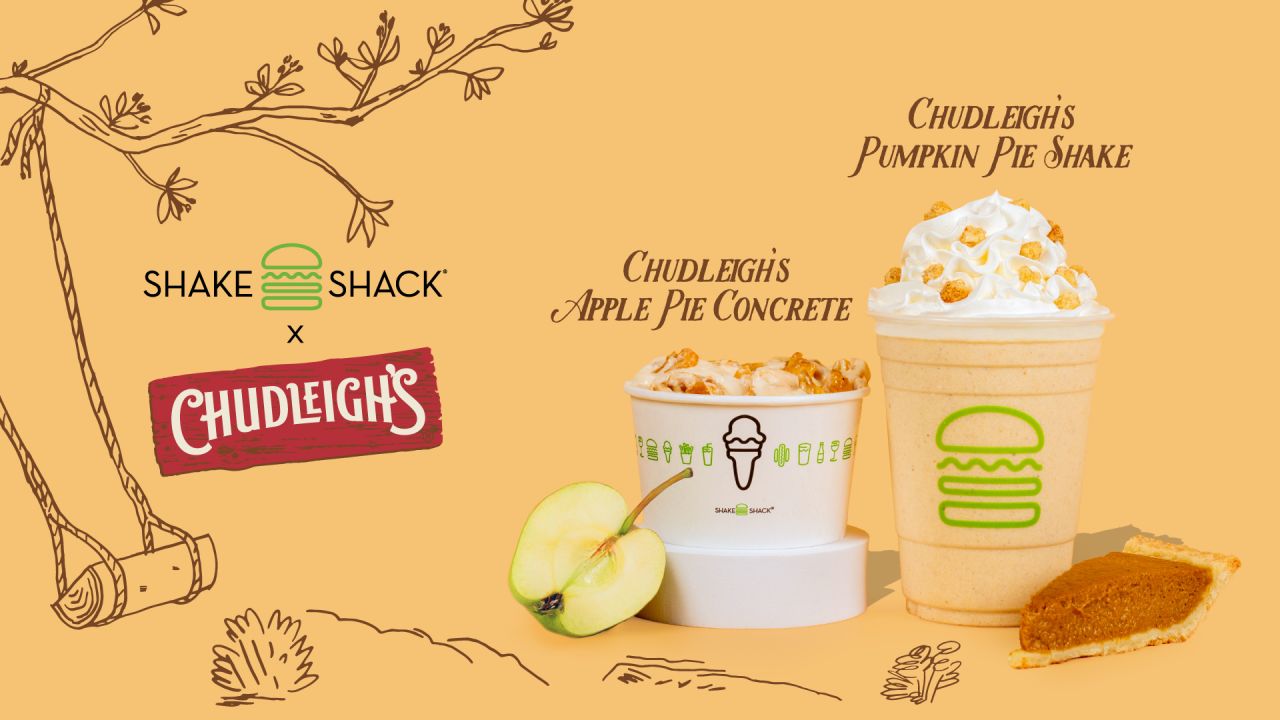
Source: Shake Shack Canada
The SHAKE SHACK® x CHUDLEIGHS® collab promotes a delicious seasonal line of pumpkin pie flavoured shakes available at Shake Shack restaurants. Shake Shack is a recent entrant into the crowded fast-food scene in Canada, historically dominated by the likes of Tim Hortons and McDonald’s who have developed significant brand equity though years of interaction with and service to Canadian consumers. Chudleigh’s, on the other hand, is an Ontario institution dating to 1955 with roots going back even further.
Partnering with Chudleigh’s appears to be part of a strategic marketing decision by Shake Shack to build connection and visibility with Canadian consumers (particularly those in Ontario). Indeed, the collaboration with Chudleigh’s is the latest in a series of “hyper local” brand collabs with Shake Shack and other Ontario-based brands, including previous partnerships with local restaurants, Pizzeria Badiali and MIMI Chinese on menu items, and with BELLWOODS BREWERY® on a house ale beverage product.
By leveraging the goodwill associated with local brands, this type of hyper locality can be a meaningful way for a newer entrant to a market to connect and build reputation and trust with a local community. From a legal perspective, a careful approach to a written trademark license and co-brand agreement nevertheless remains important.
Video games and cross-platform brand collabs
Video game collaborations raise similar issues across more formats. RIOT GAMES®’ 2019 collaboration with LOUIS VUITTON® included a trophy travel case, champion skins, and a capsule collection. FORTNITE®’s 2021 BALENCIAGA® project combined digital items with a branded hub and physical apparel. BURBERRY® and MINECRAFT® followed in 2022 with an in-game adventure and physical collection.
These projects show how brand/content collaboration and IP licences can extend across physical products, virtual items, screenshots, gameplay, social media, and digital environments. A short campaign can leave a long digital trail. Again, these collaborations require careful thought as to the legal implications on partners’ IP. Generally, these issues are managed via a clearly set-out formal written license. The licence should state which assets may be used, where they may appear, who approves each use, whether sublicensing is allowed, how long permission lasts, and what happens when the campaign ends, including who is the owner of any IP resulting from the collab.
Brand collabs across categories and industries? IP Remains Core
As you might expect, in addition to the apparel and gaming examples above, the same principles generally apply for brand collaborations across industries and categories. MINI® and British clothing designer PAUL SMITH® have partnered on vehicle design projects and special editions. American streetwear brand Supreme has collaborated across categories ranging from apparel to motorcycles and sporting goods. Both move established brand identities into unexpected settings.
 “SUPREME Logo” |
Across industries, each side of a brand collaboration contributes something distinctive. That distinctiveness is both the commercial fuel for the collaboration and in the case of trademarks, a legal asset needing protection, particularly when a brand moves beyond the products or services consumers ordinarily associate with it.
Here are some tips and best practices to keep in mind when planning and developing brand collabs:
Keep each brand distinctive
A collaboration should make both brands easier to recognise, not harder. A trademark licence should identify the owner of each mark and govern how the marks appear together. If the public cannot tell who owns what, or whether the relationship is temporary or ongoing, the campaign may create confusion as to the source of the associated products or services and erode the distinctiveness of any associated trademarks.
In Canada, brand owners should preserve trademark distinctiveness, so consumers continue to recognise each mark as pointing to a particular source. Loose, inconsistent, or overly blended use may weaken a mark’s value. If the respective trademark owners do not control the character and quality of the associated services, they risk the validity of their trademarks. The pairing can remain creative, but the licence rules should be settled before launch.
Settle on IP license terms before launch
IP licensing can be nuanced and complex, and there are various issues requiring careful thought and attention to ensure that each collaborator’s IP is properly protected and that their relationship proceeds smoothly.
Define the Relationship
The parties should begin by defining the relationship. Is it a one-time product drop, a capsule collection, an in-game activation, a long-term licence, or a broader partnership? The precise nature of the relationship will dictate the types of conditions included in a license and the nature and extent of relevant terms and conditions. For example, each party will usually retain ownership of the IP it brings to the project while granting the other a limited licence to use specified assets for agreed purposes. The scope should be no broader than the collaboration requires.
2. Define the protected IP and uses
The licence should identify the protected IP assets (trademarks, copyrights and other IP) and permitted uses, including product categories, territories, sales channels, royalties and revenue allocation, campaign period, and any right to sublicense. It should also address ownership and reuse of new artwork, product designs, combined brand treatments, photography, and other materials. Each party should confirm that it owns and/or has the right to license the relevant brands and the content it supplies under the agreement.
Agree on Approval and Quality Control
Approval and quality-control provisions are central to trademark licensing. The agreement should establish review procedures for the relevant goods/services, production standards, audit rights, remedies for non-compliant use, and measures to report and avoid marketplace confusion, along with brand use guidelines. It should also address packaging, advertising, online content, and influencer activity so that permission is clear across every campaign channel.
Have a clear exit plan
The exit plan should address, among other things, when the licence ends, which uses must stop, how remaining stock will be handled, and whether old posts may stay online. It should also allocate responsibility for monitoring and responding to counterfeits, unauthorized merchandise, or other uses that fall outside the licence.
Likewise, responsibility and control over IP enforcement matters should be addressed. And, of course, liability for claims, ranging from IP claims to product liability claims, should be considered, along with indemnity provisions.
Takeaways
A strong brand collaboration can build attention and goodwill far beyond each collaborator’s typical market. A well-planned licensing arrangement with a clear and properly drafted written license agreement can do that while preserving ownership and protecting the distinctiveness, reputation, and consumer trust in the collaborator’s brands and products, that made the partnership worth pursuing.
For more information or assistance regarding brand collaborations, please contact a member of our trademarks team.
This article is intended to provide general information only and should not be relied on as legal advice.
Subscribe to receive more articles like this here.


/Passle/6130aaa9400fb30e400b709a/SearchServiceImages/2026-10-23-08-18-54-691-6adb186ebd29a7ce1f63fc00.jpg)
/Passle/6130aaa9400fb30e400b709a/MediaLibrary/Images/2026-10-21-11-59-19-999-6ad8a9179207ce3b4702378c.png)
/Passle/6130aaa9400fb30e400b709a/SearchServiceImages/2026-10-16-11-15-18-770-6ad20746ee7a454c2dbe1b59.jpg)