
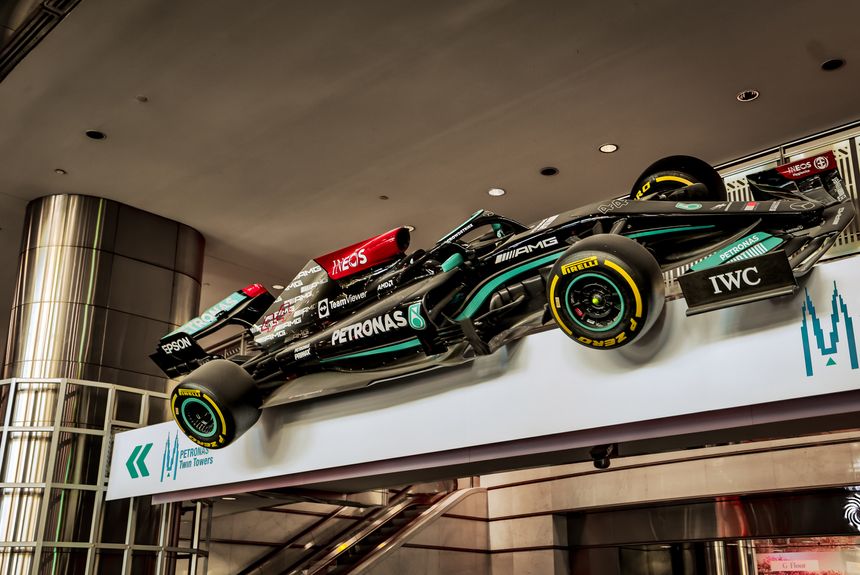
Yesterday's Formula 1 race was notable not only for what happened on track, but also for where it took place. Amid ongoing concerns in the Middle East, Bahrain's Grand Prix temporarily moved to Malaysia, creating an unusual scenario in which one country hosted another's race.
The arrangement highlighted the immense commercial value of Formula 1. The costs involved in the sport are enormous. Hosting a race can cost upwards of $100 million, while each car is typically worth $15-20 million! Across the grid, that represents close to half a billion dollars' worth of machinery competing over a single weekend.
Malaysia last hosted Formula 1 in 2017 before stepping away due to the financial burden of staging a Grand Prix. This time, however, the economics were different. Bahrain reportedly bore much of the cost, allowing it to honour long-term commitments to Formula 1 and its broadcast partners, while Malaysia benefited from the influx of visitors and the tourism revenue generated by the event. It was a reminder that modern motorsport is as much a commercial enterprise as it is a sporting competition.
Sponsorship is central to this business model. The high costs of participation mean that teams, organisers and drivers all rely heavily on brand partnerships. My brother-in-law, Sanjay Pattis, understands this well.
As a young man, Sanjay aspired to become a professional racing driver, but the costs of pursuing a racing career eventually proved prohibitive. Years later, he returned to the sport in a different capacity, founding and leading his own team, Racing Aurora, which competes in the TSS Super Series.
While the financial stakes are not comparable to Formula 1, motorsport at every level demands significant investment. A set of racing tyres can cost more than $10,000, making sponsorship just as important to success. Racing Aurora enjoyed an impressive debut season, winning its first race and securing third place overall in its first championship. That success helped attract sponsors including U Mobile, Bemer and Astro, all keen to associate their brands with high-performing teams and ambitious growth stories. You can read more about Racing Aurora's success in The Robb Report.
The same principles operate on a far larger scale in Formula 1. Global brands invest billions in the sport because of its unique combination of international reach affluent audiences. Sponsors range from energy companies such as Petronas to luxury watchmakers, fashion houses and technology businesses. For many, Formula 1 offers an opportunity to showcase innovation, performance and excellence on one of the world's most visible sporting stages.
Behind every one of those sponsors sits a valuable brand. Whether displayed on a race car, a driver's overalls or track side advertising, those brands are key commercial assets that must be protected. Trade marks play a vital role in safeguarding brand identity, preventing misuse by third parties and preserving the reputation and exclusivity that sponsors work hard to build.
Yesterday's race may have been an unusual chapter in Formula 1's history, but it offered a timely reminder that the sport's real power extends far beyond the circuit. Behind the speed, spectacle and competition lies a complex ecosystem of sponsorship, branding and IP that keeps the (rather expensive!) wheels turning.
Subscribe to receive more articles like this here.

/Passle/6130aaa9400fb30e400b709a/SearchServiceImages/2026-10-23-08-18-54-691-6adb186ebd29a7ce1f63fc00.jpg)
/Passle/6130aaa9400fb30e400b709a/MediaLibrary/Images/2026-10-21-11-59-19-999-6ad8a9179207ce3b4702378c.png)
/Passle/6130aaa9400fb30e400b709a/SearchServiceImages/2026-10-16-11-15-18-770-6ad20746ee7a454c2dbe1b59.jpg)