
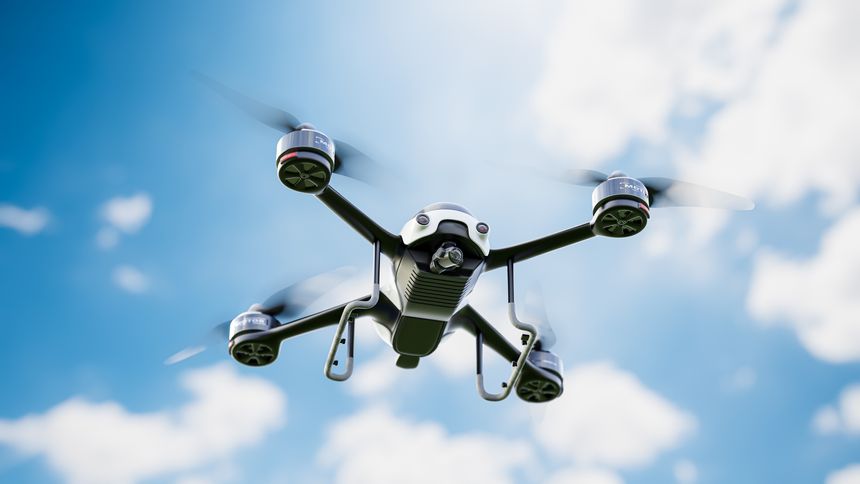
The Satellite Applications Catapult’s investment in the National Autonomy and Drone Innovation Centre (NADIC), announced at DroneX 2026, highlights the growing link between drone and space-based technologies.
While drone innovation is often associated with aircraft design or flight operations, many of the facility's planned capabilities focus on position, navigation and timing (PNT) resilience and satellite communications integration. This shows the increasing overlap between the drone and space sectors, where advances in navigation, communications and autonomy are increasingly finding applications across both industries.
The announcement was not simply about expanding drone testing capacity, but about investing in the infrastructure needed for the wider autonomy economy. A particularly encouraging aspect is the effort to bring a range of testing and validation capabilities together in a single facility. For many innovators, especially small and medium-sized businesses, demonstrating that a technology is safe, reliable and ready for deployment can be as challenging as developing the technology itself. By providing access to specialist facilities under one roof, NADIC has the potential to simplify that process and help bring new technologies to market more quickly.
From an intellectual property perspective, this highlights the importance of adopting a broad protection strategy from the outset, as innovations developed for the drone sector may ultimately find valuable applications in the space sector, and vice versa.
Subscribe to receive more articles like this here.
The Government has set a target of routine drone flight beyond the pilot’s line of sight by 2027, and forecasts value the UK drone economy at up to £45 billion by 2030.

/Passle/6130aaa9400fb30e400b709a/SearchServiceImages/2026-10-23-08-18-54-691-6adb186ebd29a7ce1f63fc00.jpg)
/Passle/6130aaa9400fb30e400b709a/MediaLibrary/Images/2026-10-21-11-59-19-999-6ad8a9179207ce3b4702378c.png)
/Passle/6130aaa9400fb30e400b709a/SearchServiceImages/2026-10-16-11-15-18-770-6ad20746ee7a454c2dbe1b59.jpg)