
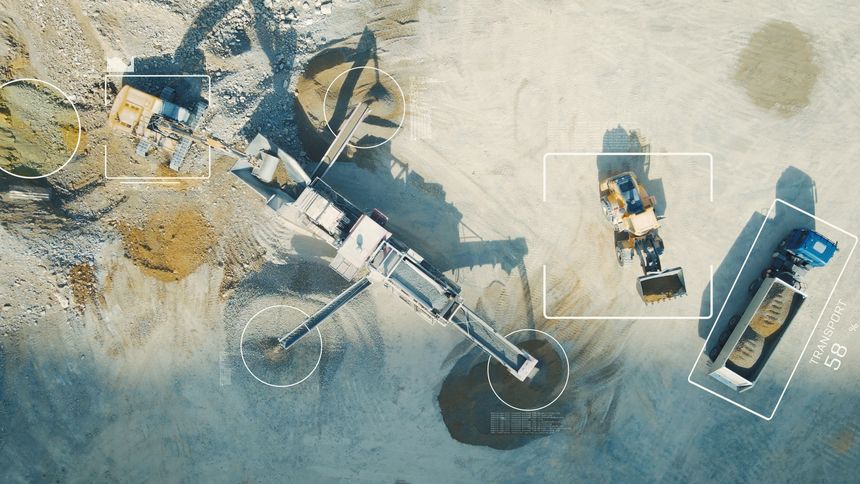
Earlier this month, at the Conference of Metallurgy and Materials (COM) in Calgary, Alberta, I presented findings from my research paper on 'Global Patent Filing Trends for Hydrometallurgical Processing of Mining Waste for Recovery of Critical Minerals'. The COM conference brings together researchers, academics, experts and professionals from across the globe to network, collaborate and learn about the latest developments and innovations in minerals and metallurgical sciences.
In this article, I provide a summary of the insights shared during my talk, which focused on the growth opportunities for Canadian mining innovators stemming from global innovation and patent trends.
Innovation fueled by Rising Demand for Critical Minerals
Critical minerals are increasingly in high demand, driven by the clean energy transition, electric vehicles, and digital infrastructure like AI and quantum computing, causing innovators to look for new and alternative sources of critical minerals.
With the high cost of developing new mining projects, an opportunity lies in reprocessing existing mining waste, which is increasingly evolving from a research topic into a commercially relevant area of innovation, and has led to an increase in global patent filings related to hydrometallurgical processing of mining waste.
At the same time, governments, including those in Canada, are introducing policies and funding programs designed to facilitate the recovery of valuable minerals from tailings and other mine waste streams. These include Ontario's Critical Minerals Strategy, the Ontario Critical Minerals Innovation Fund, and Canada's Critical Minerals Research, Development and Demonstration Program.
Patent filing activity, government support programs, and emerging project development all point in the same direction: growing interest in extracting additional value from materials once considered waste. The increasing volume of patent activity suggests that the race to recover critical minerals from mining waste is already underway.
Together, these developments point to a sector gaining momentum as industry seeks new approaches to meeting rising demand for critical minerals.
Mining Waste Is Increasingly Viewed as a Resource
Mining waste has traditionally been regarded as a byproduct of mineral extraction. However, many waste streams, including tailings and waste rock, continue to contain measurable quantities of valuable metals and critical minerals. As demand for these materials grows, companies are increasingly evaluating whether previously discarded materials can become economically viable feedstocks.
An analysis of global patent filings relating to hydrometallurgical processing of mining waste for critical mineral recovery reveals a notable increase in innovation activity during 2024 and 2025. By analysing global patent filing activity, the study provided insight into not only the increase in patent filings, but also into the jurisdictions where those filings are being made.
Patent activity in this field is heavily concentrated in China. Moreover, many of the identified inventions filed in China appear to be protected only within China rather than through broader international patent portfolios; for example, in 2024, of the 42 patent families identified as including a filing in China, 40 were filed exclusively in China rather than being extended internationally.
The innovation opportunity for Canadian Mining companies
For Canadian companies working in the mining industry, the lessons to be learned include understanding which critical minerals can be recovered from waste streams, and also what technologies and processes can be used, and moreover understanding which technologies and innovations have been patented and may be available for licensing, and of course where gaps and opportunities may exist for potential new inventions.
As Canadian mining companies develop new hydrometallurgical methods, improve critical mineral recoveries, reduce reagent consumption, enhance environmental performance, or create novel process configurations, they have the potential to generate valuable intellectual property along the way that can become a strategic commercial asset in its own right.
Historically, many mining organizations focused their intellectual property efforts on collaborations with equipment suppliers, service providers, or downstream technology developers. In the current economy and with an increasing global focus on critical minerals and waste recovery, however, processing innovation may become a primary source of differentiation and enhanced productivity for Canadian mining companies.
Key Takeaways
Mining organizations in Canada that can systematically identify, protect, and leverage the innovations they are creating, and develop a clear intellectual property strategy may be better positioned to attract investment, support commercialization and growth, establish new partnerships, and create long-term competitive advantage for themselves and the Canadian economy.
To learn more about Critical Minerals and IP Risk in Canada’s Supply Chain Strategy in this article here: Critical Minerals, Defence Demand, and the Quiet Rise of IP Risk in Canada’s Supply Chain Strategy
To learn more about how mining companies can benefit from an intellectual property strategy, speak to a member of our Canadian patent team.
Subscribe to receive more articles like this here.

/Passle/6130aaa9400fb30e400b709a/SearchServiceImages/2026-10-13-13-25-19-174-6ace313f215a8c2ff54838bb.jpg)
/Passle/6130aaa9400fb30e400b709a/SearchServiceImages/2026-10-13-10-36-01-063-6ace09918209d8ca98299005.jpg)
/Passle/6130aaa9400fb30e400b709a/MediaLibrary/Images/2026-10-08-08-39-07-272-6ac756abfb51287ac227462a.png)