
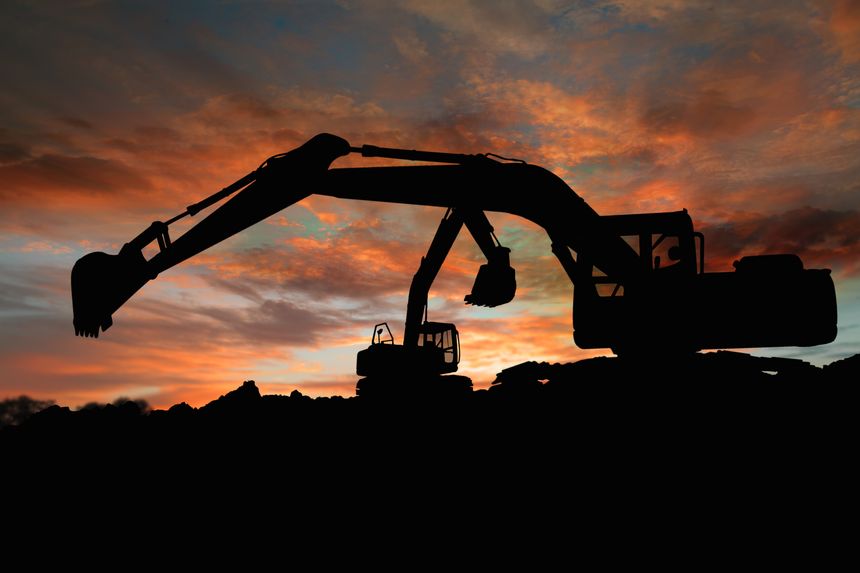
JCBs are inherently cool even if they are usually seen as slow-moving powerhouses rather than as speedsters. The JCB Hydromax changes that notion as it combines the general coolness of JCBs with a land speed record and the fastest man on land.
The JCB Hydromax has now claimed the land speed record for a zero-emission, hydrogen powered car after achieving a two-way average speed of 406.320 at the Bonneville Salt Flats in the US. This is also another land speed record for Wing Commander Andy Green, who remains the only person to break the sound barrier on land.
This is a wonderful engineering success, but what I found most interesting was that the Hydromax used hydrogen-powered internal combustion engines, each developing 800 bhp. Usually, hydrogen-powered vehicles rely on fuel cells to generate electrical power which can be used to power electric motors. Instead, the Hydromax relies upon internal combustion of hydrogen with oxygen. The use of gaseous fuels, such as hydrogen, in a classic internal combustion engine faces the issue of the gas blowing by the piston rings and into the crankcase. This can cause safety concerns. In a recently granted European patent (EP4630662), JCB has sought to mitigate the risk of blow-by of hydrogen by providing a pump, which expels blow-by gas from the crankcase, that is positioned adjacent a side of the cylinder block. This is said to minimise the amount of space needed for the engine because the pump can sit where a fuel pump would normally sit in a diesel internal combustion engine, as a fuel pump is not required on hydrogen-powered vehicles as the fuel pressure is already provided by the compressed fuel. It is not clear whether such an arrangement was used on the Hydromax, but it is certainly a possibility given the need to produce an aerodynamic shape.
Subscribe to receive more articles like this here.

/Passle/6130aaa9400fb30e400b709a/MediaLibrary/Images/2026-10-12-15-11-09-385-6accf88d781f08c215981945.png)
/Passle/6130aaa9400fb30e400b709a/MediaLibrary/Images/2026-10-12-15-11-09-409-6accf88d925119ad2ebded8f.png)
/Passle/6130aaa9400fb30e400b709a/MediaLibrary/Images/2026-10-12-15-11-09-367-6accf88d6b66afb021ec2624.png)