
Introduction: Double‑Click Payments and Patentability at the EPO
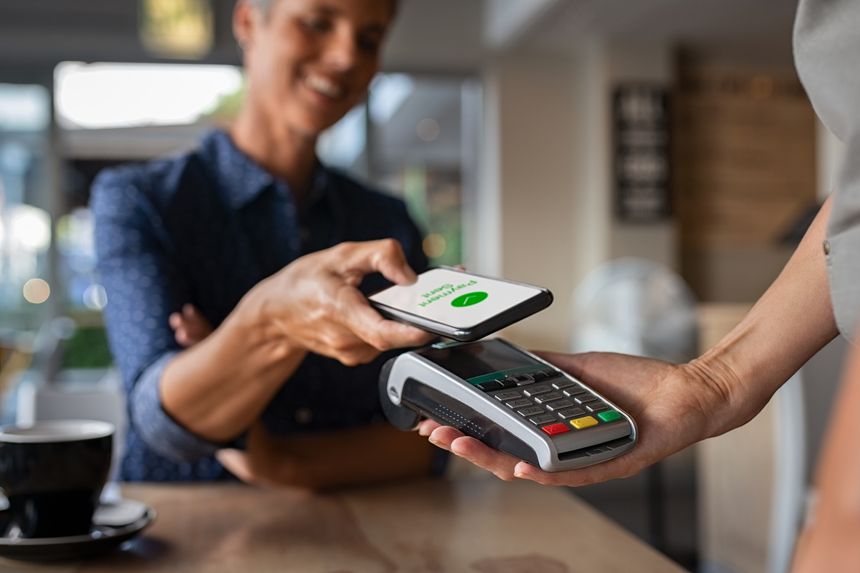
Many of us will be aware of Apple's double click to pay functionality, in which payments can be made without unlocking the iPhone. Interestingly, this technology was at the center of a recently-published decision by the Boards of Appeal of the European Patent Office in T 0035/20 (https://www.epo.org/en/boards-of-appeal/decisions/t200035eu1). The claimed invention of the patent application, EP3251068, relates to improved contactless payment without needing to unlock the smartphone to open the payment software. Payment can be made from the lock screen while access to the other functions and data of the device remains protected while the payment is carried out, as will be familiar to iPhone users. In the present case, the fingerprint sensor of the home button is used to activate the payment mechanism by double pressing the home button within a predetermined time period (such as 300 ms). If only one press is detected, the device unlocks, whereas if two presses within the time period are detected, and if the fingerprint is validated, contactless payment can be made.
The Board of Appeal’s Reasoning: Technical Considerations Behind the Double Press
The Board of Appeal went against this reasoning, and considered that the double press to activate payment in combination with fingerprint verification is not a simple mapping of an input to a function, and there were technical considerations. The Board commented at R. 13:
“…using the home button on the iPhone for activating payment from the lock screen was not without technical difficulty, as the same button and fingerprint sensor were already used for unlocking the device. Those are technical considerations for a technically skilled person, and the solution to use a double press defined by a predetermined time interval between a first and a second press, is a technical solution.”
The problem to be solved was therefore formulated as “how to simplify payment with fingerprint authentication” rather than how to implement a user requirement of when and how to pay. Apple argued that the advantage of the invention was faster payment activation and improved security, which seems sensible when compared with the iPhone 6, but the Board considered increased security to be a bonus effect, with the actual main advantage being simplified payment.
It was interesting to note that the Board found the double press payment functionality to be non-obvious, firstly because no prior art disclosed an input with a fingerprint sensor having the dual function of verification and enabling payment without unlocking the device. Secondly, and perhaps most relevant in my view, the home button on the closest prior art, the iPhone 6, was “overloaded” which effectively would have acted as a deterrent to add even more functionality to this button. This is a great example of the could/would approach to inventive step, where just because an invention is possible (it could be done), this does not necessarily mean that the invention is obvious (that the modification to the iPhone 6 would be made). On this point, the Board added that on the iPhone 6, functionality could already be accessed from the lock screen, such as the camera app by swiping left without unlocking the device, and therefore, if the skilled person wished to implement a different payment method in the iPhone 6, they would have been aware of the other mechanisms apart from the home button that could be used to do so. Thus, the present case related to technical considerations relating to the implementation of a user interface which was not a mere mapping of an input to a result. The invention was therefore considered to have an inventive step.
Key Takeaways: Patentability of Human–Machine Interface Improvements
This case highlights the importance of considering fully if there is a technical nature to what may appear to be trivial improvements to how a user may interact with a device. Technical improvements to the human-machine interface may be patentable, even for an incremental improvement to earlier known interfaces.
If you would like some advice on patents for similar technologies, you can contact me on cmartin@marks-clerk.com or else the wider patents team at glasgow@marks-clerk.com.

/Passle/6130aaa9400fb30e400b709a/MediaLibrary/Images/2026-10-21-07-22-50-475-6ad8684a5c73b46f67f1a218.png)
/Passle/6130aaa9400fb30e400b709a/SearchServiceImages/2026-10-16-11-15-18-770-6ad20746ee7a454c2dbe1b59.jpg)
/Passle/6130aaa9400fb30e400b709a/SearchServiceImages/2026-10-19-09-02-38-478-6ad5dcaee0594699cc5db2d7.jpg)