
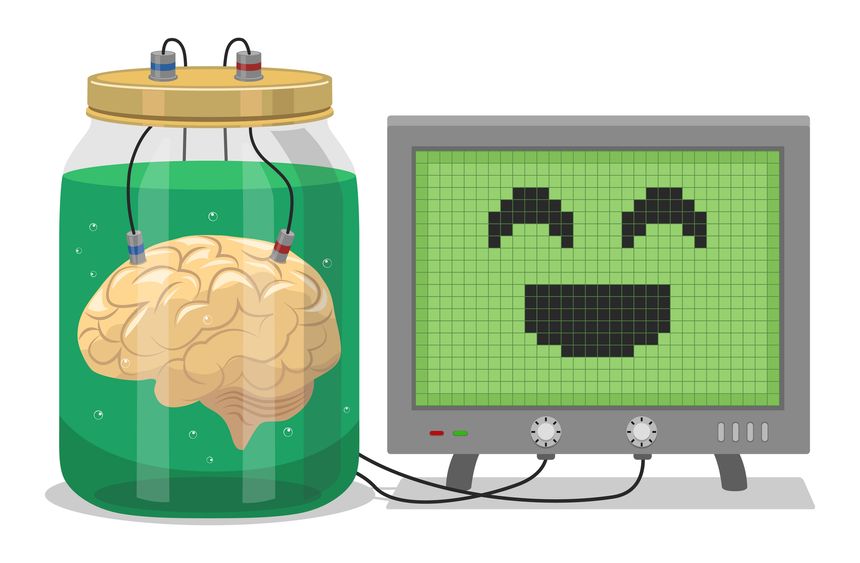
If recent reports are to be believed, AI poses an existential threat to humanity and we’re already over a quarter of the way through our final century1, 2. As governments grapple with the impact of AI on national security and prosperity, there is a global debate on the need for regulation. Whilst undoubtedly a useful tool for increasing productivity, reports of misuse of AI are already emerging, including a “malicious” attempt to design biological weapons3.
Whether or not AI represents the death knell for homo sapiens remains to be seen. As we tentatively await our fate, those in the patent profession may reasonably be concerned about whether AI could sooner pose an existential threat to a particularly important person - the person skilled in the art.
The hypothetical skilled person sits at the heart of patent law. We ask ourselves what the skilled person understands from the technical teaching of a document, how the skilled person interprets the claims, could the skilled person carry out the invention based on the patent disclosure, and is the claimed subject matter obvious to them. The skilled person possesses common general knowledge in the relevant technical field and ordinary technical competence but lacks any inventive capacity.
Under UK and European practice, inventive step is assessed through the eyes of the skilled person armed with their common general knowledge and their ordinary technical skill. It is based on an enquiry as to what would have been obvious to the skilled person at the filing date in light of the prior art. It can be regarded as the line in the sand between routine technical tweaks and a genuine invention. The skilled person is therefore absolutely critical to the assessment of a cornerstone of patentability.
However, the skilled person is not frozen in time. The skilled person for patent applications being filed today has routine access to technologies which were inconceivable even a few years ago, in particular AI tools. Indeed, increasingly sophisticated AI can identify solutions to technical problems that may not be immediately apparent to human researchers and in a fraction of the time, for example in the pharmaceutical industry4.
Whilst there is a general consensus in emerging case law, including in the UK, that AI cannot be an ‘inventor’ (a status reserved for natural persons), the case law hasn’t yet grappled with the question of whether access to AI affects the identity of the skilled person, and more particularly whether it affects the skilled person’s ordinary technical skill. If AI cannot be an inventor, can the hypothetical skilled person nevertheless use it to do some ‘obvious inventing’?
The skilled person is generally regarded as a hypothetical human endowed with human intelligence (of course), but how do we assess inventive step when human intelligence is augmented by artificial intelligence? Is the standard for what would have been obvious to a skilled person altered if we accept that the skilled person of today augments their own human intelligence with artificial intelligence? If the skilled person looking to solve a problem at the filing date would have hypothetically asked an AI tool for a solution to a particular problem, what if it could be demonstrated that the AI tool would have presented the skilled person with an identical solution to that now claimed?
Ultimately, it feels like there would be a high evidentiary bar to demonstrate that access to an AI tool would have conclusively led the skilled person to the claimed solution. There are many variables to be considered which could lead to different outputs, including the prompts submitted, the prior art selected as a starting point, and the data the model is trained on. An argument that the solution was obvious to the skilled person if they used a particular AI tool in a particular way based on particular prior art documents is likely to be regarded as an ex post facto analysis of the inventiveness of the claim. Even if it were accepted that the skilled person’s ordinary skill included using sophisticated AI models to solve problems in the technical field on a routine basis, arguably this is no different to the skilled person having regular access to patent databases, textbooks, literature articles and so on to achieve the same goal. The question is not then whether the skilled person assumes the knowledge of AI in determining what is obvious but is whether the skilled person would have been motivated to use AI in a particular way and in doing so would have arrived at the claimed solution.
Nevertheless, increasingly sophisticated AI models will continue to be developed that are specifically tailored to specific technical fields, and hence have a vast command of contextual background knowledge which was previously the preserve of the skilled person. Under these circumstances, knowledge of how to use AI systems, and even AI itself, may form part of the ‘common general knowledge’ of the skilled person – at which point, does the skilled person become effectively omniscient with access to models trained on vast quantities of data in the technical field?
If the skilled person is no longer characterised by ordinary skill on a human level because their skill encompasses the skill derived from AI intelligence too, is the skilled person destined to become a fusion of human and machine, and what does this mean for inventive step? If we as attorneys, and the Courts, cannot fully comprehend the mindset of the skilled person at the filing date because we cannot fully comprehend the degree to which the skilled person is influenced by AI, then how can inventive step be objectively assessed? It is conceivable that the threshold for inventive step may evolve if AI-assisted problem solving becomes a routine aspect of the skilled person’s toolkit. Perhaps the skilled person will be a person no more and assumes its new identity as a skilled cyborg.
Subscribe to receive more articles like this here.

/Passle/6130aaa9400fb30e400b709a/SearchServiceImages/2026-10-16-13-28-09-937-6ad22669de6b66bfe10f1be3.jpg)
/Passle/6130aaa9400fb30e400b709a/SearchServiceImages/2026-10-15-13-59-24-760-6ad0dc3caa6596dee349c576.jpg)
/Passle/6130aaa9400fb30e400b709a/SearchServiceImages/2026-10-15-09-22-55-529-6ad09b6f294f5d4c2d2ceea7.jpg)