
The long-running dispute between McDonald’s and Irish burger chain Supermac’s has continued to raise important questions around brand strength, trade mark distinctiveness and enforcement strategy.
The case is a reminder that even well-known brands may face limits when seeking to prevent third-party registrations, particularly where the overlap concerns a less distinctive element. For brand owners, the decision underlines the importance of considering trade mark strength alongside brand story and marketing appeal.
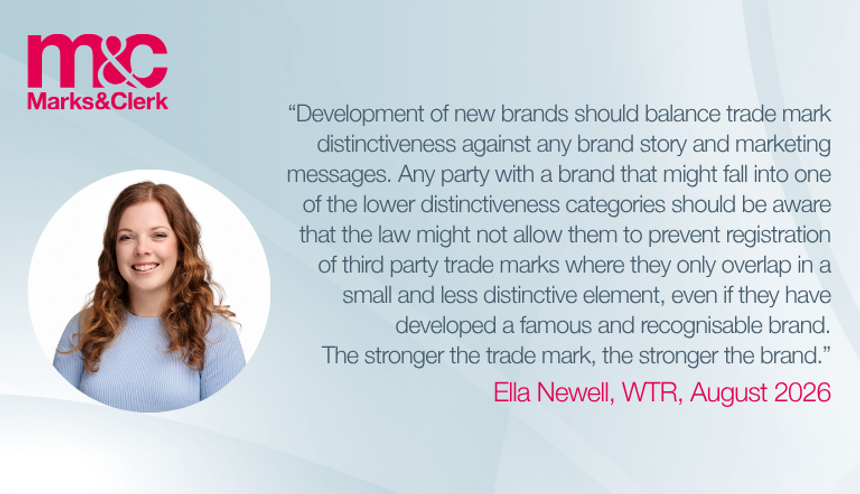
In a recent article published by World Trademark Review, Ella Newell comments on why McDonald’s failed to stop Supermac’s before the UKIPO. She highlights that the development of new brands should carefully balance distinctiveness with commercial messaging, noting that stronger trade marks can provide stronger foundations for brand protection.
Subscribe to receive more articles like this here.
Development of new brands should balance trade mark distinctiveness against any brand story and marketing messages. Any party with a brand that might fall into one of the lower distinctiveness categories should be aware that the law might not allow them to prevent registration of third party trade marks where they only overlap in a small and less distinctive element, even if they have developed a famous and recognisable brand. The stronger the trade mark, the stronger the brand.

/Passle/6130aaa9400fb30e400b709a/SearchServiceImages/2026-10-16-13-28-09-937-6ad22669de6b66bfe10f1be3.jpg)
/Passle/6130aaa9400fb30e400b709a/SearchServiceImages/2026-10-15-13-59-24-760-6ad0dc3caa6596dee349c576.jpg)
/Passle/6130aaa9400fb30e400b709a/SearchServiceImages/2026-10-15-09-22-55-529-6ad09b6f294f5d4c2d2ceea7.jpg)