
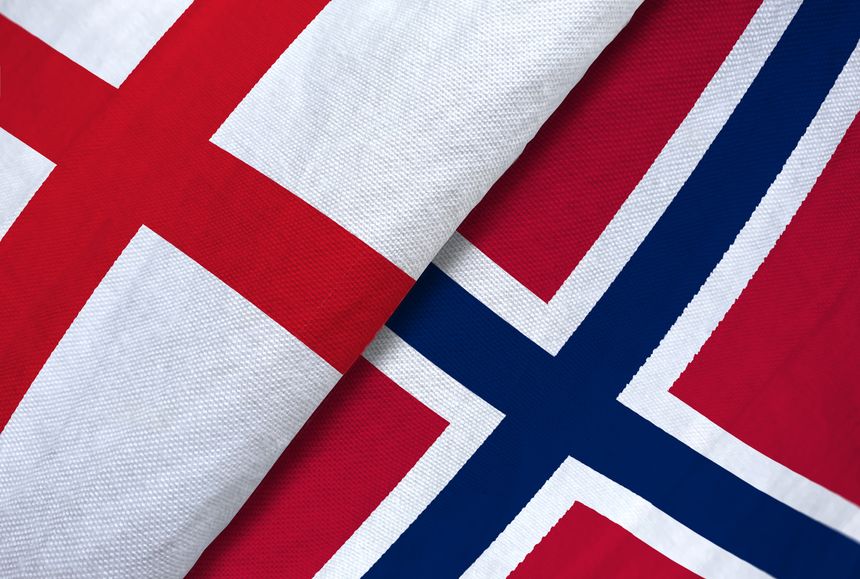
England are through to the World Cup semi-final, the nation is dreaming again and, for 24 hours at least, British Airways appears to have acquired a Norwegian subsidiary.
Ahead of England's quarter-final against Norway, Norwegian Air challenged British Airways to a wonderfully simple social media wager: the airline representing the losing nation would replace its profile picture with the winner's logo.
England won 2–1. Norwegian lost. And the British Airways logo duly appeared on Norwegian's Instagram account.
As a football fan, I love it. As a trade mark attorney, I can't help thinking: someone made sure the lawyers were happy with this, right?
Taken out of context, one major airline using the trade mark of a competitor as its own social media profile picture is precisely the sort of thing that might cause a trade mark lawyer to spill their coffee.
Trade marks perform a fundamental function. They tell consumers where goods and services come from. Airlines invest enormous sums in their brands, and their logos are among their most valuable commercial assets. Unauthorised use of an identical trade mark by a competitor, particularly in connection with identical services, would ordinarily raise some fairly obvious questions about infringement, confusion and the exploitation of brand reputation.
The important word here, of course, is unauthorised.
This was plainly a friendly, agreed marketing stunt. British Airways consented to the wager, Norwegian accepted its fate with good humour and both brands generated publicity from it. Far from undermining their respective identities, the campaign worked precisely because both brands are so instantly recognisable.
There is nevertheless a useful lesson for businesses contemplating similar adventures.
Permission to use another company's trade mark should never simply be assumed, however funny the social media post may be. Sensible brands will agree in advance exactly what can be used, where, for how long and in what context. A 24-hour Instagram joke is one thing. Leaving your competitor's logo on your website for six months is quite another.
There are also practical risks. Social media users increasingly rely on profile images as an immediate indication of authenticity. A sudden logo swap could theoretically create confusion, facilitate impersonation or provide opportunities for fraudsters. Context matters enormously.
But done properly, as appears to have happened here, this is a brilliant example of two competitors understanding that trade marks are not merely legal assets to be guarded behind barbed wire. They are communication tools, capable of humour, personality and cultural relevance.
Norwegian may have lost the football and temporarily lost its logo. But in marketing terms, both airlines probably won.
And as for England?
Just two more wins.
Surely nothing can go wrong from here...
Subscribe to receive more articles like this here.
England quarter-final win leaves Norwegian adopting British Airways logo

/Passle/6130aaa9400fb30e400b709a/MediaLibrary/Images/2026-10-21-11-59-19-999-6ad8a9179207ce3b4702378c.png)
/Passle/6130aaa9400fb30e400b709a/SearchServiceImages/2026-10-16-11-15-18-770-6ad20746ee7a454c2dbe1b59.jpg)
/Passle/6130aaa9400fb30e400b709a/SearchServiceImages/2026-10-19-09-02-38-478-6ad5dcaee0594699cc5db2d7.jpg)