
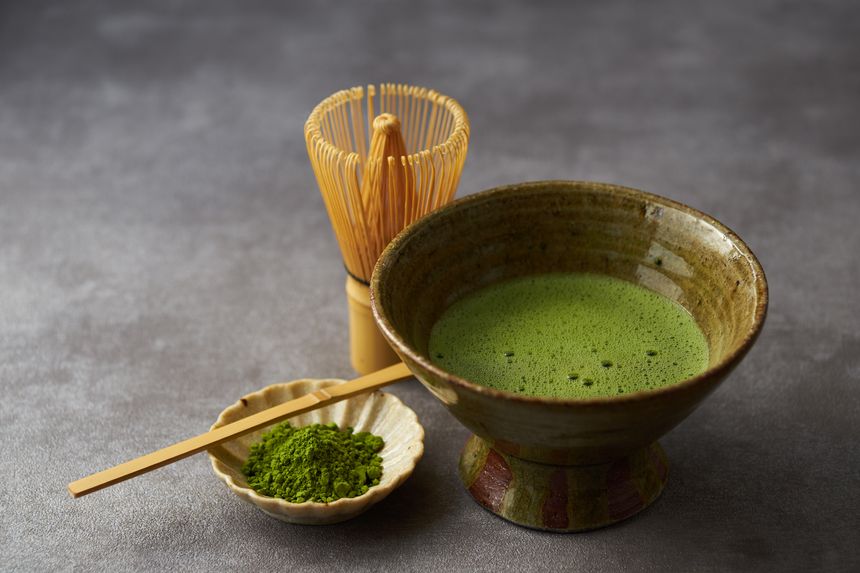
If it feels like matcha is suddenly everywhere, that's because it pretty much is.
From café menus and supermarket shelves, to TikTok feeds filled with carefully curated morning routines, matcha has become the drink of the moment. Whether it's being whisked into a traditional tea ceremony, blended into a latte or featured in a wellness influencer's latest reel, global demand for matcha shows little sign of slowing down.
What many consumers do not realise, however, is that matcha is not actually a type of tea.
In Japanese, matcha simply means "powdered tea". It refers to a processing method rather than a particular tea variety. The same is true of terms such as sencha and tencha. Sencha is tea that is rolled into the familiar needle-shaped leaves before brewing, while tencha is tea that is left flat and dried before being ground. Matcha is, in fact, finely ground tencha.
As a result, two matcha products can taste remarkably different depending on factors such as the tea cultivar used, the length of time the plants are shade-grown before harvest and, perhaps most importantly, where the tea is grown. The popularity of matcha has had a profound impact on the Japanese tea industry. Global demand continues to rise, Japanese tea exports have reached record levels and producers have increasingly shifted production from sencha to tencha to meet consumer appetite. With supply under pressure and competition intensifying, prices have climbed sharply.
However, commercial success rarely goes unnoticed. Technically, matcha can be produced almost anywhere in the world. Provided a tea plant is grown, shaded and processed into tencha before being ground into a fine powder, the resulting product can be described as matcha. While this creates opportunities for tea producers globally, it also presents challenges for Japanese growers whose expertise, heritage and reputation helped establish the product's premium status in the first place.
As demand for premium products grows, much of the commercial value lies not only in the product itself but in the story, heritage and reputation associated with its origin. Unsurprisingly, products produced outside Japan are increasingly marketed using Japanese tea terminology, imagery and references that evoke Japanese tea culture. While such marketing is not always misleading, it can blur the lines around provenance and authenticity, leading consumers to believe they are purchasing traditional Japanese matcha, or a product with equivalent qualities and standards, when that may not be the case.
Recognising these risks, Japan's Ministry of Agriculture, Forestry and Fisheries (MAFF), together with industry stakeholders, is pursuing Geographical Indication (GI) protection for "Japanese Tea" (Nihoncha). If successful, the designation would restrict the term to tea that is grown, harvested and processed in Japan, placing it alongside internationally recognised protected products such as Kobe Beef and Yubari Melon. The application highlights a challenge familiar to many successful food and drink products. As products achieve global recognition, their reputation often becomes one of their most valuable commercial assets. Without effective protection, that goodwill can be eroded by competitors seeking to benefit from a reputation that others have spent decades, sometimes centuries, building.
This is where intellectual property protection becomes critical. While trade marks play a key role in protecting brands, geographical indications (GI) can be equally important where a product's value is intrinsically linked to its place of origin. A well-structured trade mark and GI strategy can help preserve authenticity, support premium pricing, prevent consumer confusion and provide meaningful enforcement tools against misuse. Crucially, it helps ensure that the commercial value generated by a product's reputation remains with the businesses, producers and communities responsible for creating it.
The Japanese tea story serves as a timely reminder that intellectual property is not solely about protecting innovation. For products whose appeal is closely tied to place, heritage and quality, protecting origin can be every bit as important. Having advised on the protection and enforcement of intellectual property rights across the food and drink sector, including products benefiting from geographical protection, I regularly see how strategic IP planning can help safeguard reputation and unlock long-term commercial value. The products that achieve global success are often the same products that attract imitation. Seeking specialist IP advice at an early stage can help businesses identify the most effective protection strategy before reputation is diluted and market value is lost.
The rise of matcha demonstrates how commercial success and global recognition create both opportunities and risks. For producers, brand owners and industry bodies alike, protecting the reputation behind a product is often just as important as producing the product itself. After all, when consumers are paying a premium for authenticity, safeguarding the origin and goodwill associated with that product is not simply a legal consideration…it's a commercial imperative.
Subscribe to receive more articles like this here.
Japan’s tea growers and traders are racing to protect the hard-won reputation of the Japanese beverage from being diluted by foreign copies.

/Passle/6130aaa9400fb30e400b709a/SearchServiceImages/2026-10-16-13-28-09-937-6ad22669de6b66bfe10f1be3.jpg)
/Passle/6130aaa9400fb30e400b709a/SearchServiceImages/2026-10-15-13-59-24-760-6ad0dc3caa6596dee349c576.jpg)
/Passle/6130aaa9400fb30e400b709a/SearchServiceImages/2026-10-15-09-22-55-529-6ad09b6f294f5d4c2d2ceea7.jpg)