
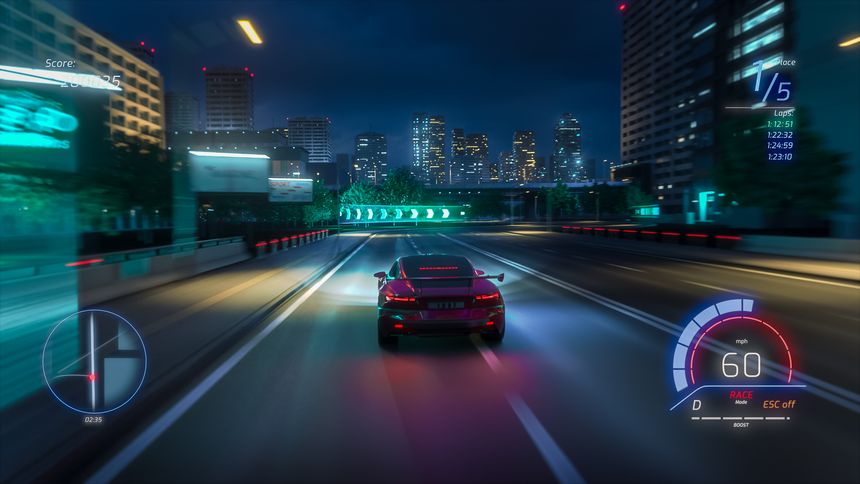
Video games contain various visual elements, interfaces, virtual environments, and digital objects which may have unique or creative designs that the creator would want to protect from copying. The aesthetic quality and arrangement of these elements, while not protectable via patents, can in many cases be protected via other intellectual property rights such as design rights.
In the UK, legal provisions under the Registered Designs Act 1949 (“RDA”) already provided a strong basis for protection of the many visual, spatial and graphical elements in games. While the UK definition of “products” under the RDA has not been explicitly expanded to include non-physical or digital items (like in the EU), UK law already recognises “graphic symbols” and “typographic typefaces” as falling within its definition of a product. Many game assets (including icons, tool overlays, UI indicators, pointers, reticles and gesture icons, and GUIs) are considered as falling within the category of “graphic symbols” and are therefore graphical works suitable for design registration in the UK.
However, until recently, the scope of EU law has made it difficult to register and protect visual elements of game design. For example, limitations to the types and number of graphical representations of a particular element that can be included in design applications have severely restricted what visual aspects of their game design creators can apply to protect at the EU Intellectual Property Office.
Recent changes to the EU Designs Regulation (Council Regulation (EC) No 6/2002), effective since 1 May 2025, have thankfully now enhanced the protection available to assets within game environments.
Specifically, the changes to the Designs Regulation have modernised the definition of the term “product” to now include non-physical and digital objects, such as graphic user interfaces (GUIs), virtual products and virtual arrangements of items that exist in game environments. The express inclusion of non-physical and digital objects under the definition of “product” now makes it far easier for applicants to protect elements of their game environments under design law.
The EU Design Implementing Regulation (No. 2026/138), in effect as of 1 July 2026, has also removed the rigid limit of seven static graphic or photographic views for representing a design within an EU design application. The previous limit heavily restricted an applicant’s ability to represent and protect dynamic and/or animated designs with specificity. The EU Intellectual Property Office will now accept up to 10 static representations, giving applicants more freedom and flexibility to accurately depict their design using static graphic or photographic views.
Furthermore, the EU Intellectual Property Office will now accept alternative file types depicting designs – it is now possible to file an EU design application using video files or computer-modelled visuals such as CAD files. This increased flexibility will allow for animated and dynamic content to be filed and represented more effectively and accurately. Previously, representing movement/transition was technically possible, but very difficult; the new implementing rules allow dynamic forms of representation to align with the inherent interactivity of games.
What parts of a game can now be more easily protected?
As outlined above, modern EU and UK design regimes allow protection for non‑physical and digital designs, allowing creators to obtain protection for a number of elements of their game environments, including the following:
Graphical User Interfaces (GUIs) and HUDs
GUIs, menus, icons, control panels, cursors, and spatial interfaces visible within games can be protected as registered designs.
Virtual Assets and Objects
Design rights now expressly cover virtual goods, avatars, 3D models, in‑world items, and digital fashion/skins.
Spatial Environments and Arrangements
Games may include virtual rooms, architectural layouts, training spaces, or simulated industrial environments.- The definition of product under the EU regulations now includes spatial arrangements of items forming an interior or exterior environment, which explicitly covers virtual environments.
- Metaverse‑style virtual product arrangements are also expressly protectable.
Animated or Dynamic Elements
Animations used in games, such as loading sequences, transitions, gesture effects, and haptic feedback visuals, are protectable.- EU reforms extend the definition of a protectable design to include “movement, transition, and animation."
Why register design rights for these elements?
It is relatively quick and cheap to obtain an EU registered design, and reliance on registered rights, over unregistered EU design rights, has a number of advantages. Registered rights provide a true monopoly right over the appearance of the design that can be used to prevent all others, including those who come up with the same idea or design independently, from using or commercialising the protected subject matter.
On the other hand, unregistered design rights require proof of copying for there to be infringement of the earlier rights. Therefore, independent creation of a later design that reproduces the overall impression would not infringe these earlier unregistered rights. In other words, once you register a design, you do not need to prove copying; independent creation is not a defence in registered design infringement.
Registered protection would therefore provide developers/creators with an effective basis to challenge both third parties who intentionally produce “look-alike” experiences and/or virtual assets, or those who independently (and perhaps inadvertently) create designs that reproduce the overall impression of a creator’s earlier design.
It is also important to flag that, when initiating take-down requests against allegedly infringing titles on platforms such as Steam, creators can only rely on registered design rights. Unregistered design rights are not considered a valid basis for requesting take-down.
There are also clear advantages to creators in obtaining registered design rights over relying on any potential copyright protection that visual elements in a game may attract. Whilst it is now clear that the majority of the aesthetic or visual elements of games are now protectable via registered design rights, what is and isn’t protectable under copyright law is less clear and differs between the UK and EU legal regimes.
In the EU, the scope of protectable subject matter has been interpreted very broadly in recent case law (see for example the decisions of Mio/konektra, C-580/23 and C-795/23), where “originality” was confirmed as the only requirement for works of applied art (such as the elements contained within a game environment) to be considered protectable under EU copyright law. In other words, so long as the applied art is the result of the author’s own intellectual creation and reflects the author’s free and creative choices, then it will in principle be protectable.
In the UK on the other hand, the scope of protectable rights are far narrower. Under UK law, only the subject matter specified in the closed list within the Copyright Designs and Patents Act 1988 (“CDPA”) are considered protectable. The list includes artistic, literary, dramatic and musical works, as well as sound recordings and films.
Whilst some elements within game environments may be considered as protectable as either artistic works (for example design drawings or static images of virtual assets and objects under section 4(1) of the CDPA) or films (such as animated sequences under section 5B of the CDPA), the artistic quality of other elements such as GUIs may not currently be considered protectable under UK copyright law.
Conclusion
As a result of the 2025 EU Designs Regulation, and the 2026 EU Design Implementing Regulation, it is now easier than ever to protect visual elements within a game as EU registered designs. These design rights provide greater legal certainty over alternative rights (such as unregistered designs and copyright protection) and can be used, in principle, to protect any novel aesthetic or visual element within game environments.
Creators may want to consider what visual aspects of their game design they want to monopolise against third-party copying, and seek legal advice as how best to protect them.
To find out more about how our Designs team can help you to protect, commercialise and enforce your design rights, visit our Designs page.
Subscribe to receive more articles like this here.

/Passle/6130aaa9400fb30e400b709a/SearchServiceImages/2026-10-15-13-59-24-760-6ad0dc3caa6596dee349c576.jpg)
/Passle/6130aaa9400fb30e400b709a/SearchServiceImages/2026-10-15-09-22-55-529-6ad09b6f294f5d4c2d2ceea7.jpg)
/Passle/6130aaa9400fb30e400b709a/SearchServiceImages/2026-10-14-14-46-12-016-6acf95b46432c6c1a4f4c47a.jpg)