
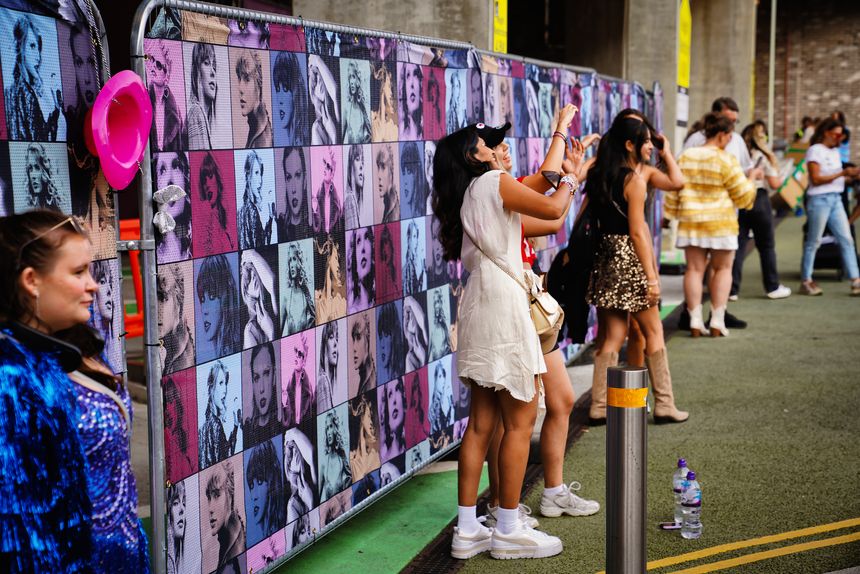
Just last month, news broke that Luke Littler intends to trade mark his face aiming to protect himself against the rise of AI‑generated deepfakes and unauthorised commercial exploitation of his likeness. This week, Taylor Swift has once again made headlines, reportedly pursuing a similar strategy by seeking trade mark protection for her voice and appearance amid growing AI concerns.
Graeme Murray, Senior Associate and Chartered Trade Mark Attorney at Marks & Clerk, has been featured across ICLG, Solicitors Journal, Creative Bloq, Yahoo! Entertainment, World IP Review, DPA, Complete AI Training and Networking Plus, providing expert commentary on the implications of these filings.
Graeme highlights that these filings from the world's most recognisable figures show a clear reluctance to wait for legislation when it comes to protecting their identity.
While the UK Government’s March 2026 report on AI suggests that a dedicated personality right may eventually be on the horizon, these high-profile filings prove that the world’s biggest stars will not wait for legislation; instead they are proactively turning their very existence into a legally enforceable brand to ensure that in an AI-driven world, consent remains the ultimate currency.
Reflecting on Matthew McConaughey's similar strategy earlier this year, Graeme notes:
Taylor Swift’s move to trademark her voice and stage image marks a pivotal shift from protecting art to protecting identity.
Subscribe to receive more articles like this here.

/Passle/6130aaa9400fb30e400b709a/MediaLibrary/Images/2026-10-12-15-11-09-385-6accf88d781f08c215981945.png)
/Passle/6130aaa9400fb30e400b709a/MediaLibrary/Images/2026-10-12-15-11-09-409-6accf88d925119ad2ebded8f.png)
/Passle/6130aaa9400fb30e400b709a/MediaLibrary/Images/2026-10-12-15-11-09-367-6accf88d6b66afb021ec2624.png)