
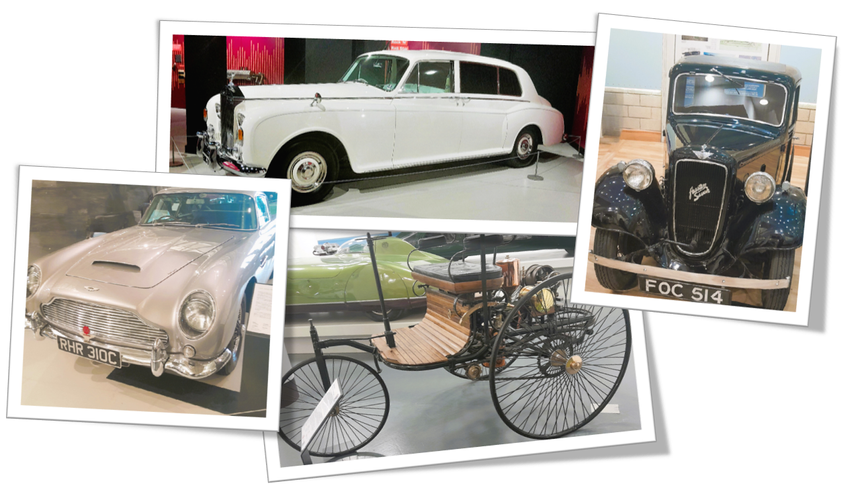
At the March 2026 AMUK Members Forum, held at the British Motor Museum, Marks & Clerk partners Julian Asquith and Susan Bradley explored how intellectual property—and patents in particular—has driven automotive innovation for more than a century. From early motor vehicles to modern safety breakthroughs, the evolution of the car has been enabled by the intelligent and sometimes surprising use of patent protection.
Marks & Clerk, founded in Birmingham in 1887, has long worked at the forefront of innovation. The AMUK presentation highlighted how strategic patenting not only safeguards inventions, but also fuels commercial success, investment, licensing opportunities and brand credibility.
Why Patents Matter in Automotive Innovation
Patents provide inventors and businesses with a competitive edge by preventing others from copying new technology. This exclusivity helps companies attract funding, stand out in crowded markets, and build valuable intellectual property portfolios. Beyond protection, patents can also generate revenue through licensing and motivate internal R&D teams to continue innovating.
Historic Patents That Shaped the Road Ahead
The automotive industry offers many compelling examples of patents playing a pivotal role in technological and commercial success, including:
1886 – Benz Patent-Motorwagen (DE37435C)
Widely recognised as the world’s first motor car, German patent DE37435C helped secure Karl Benz’s advantages in what was then a brand-new market. A replica of the Patent-Motorwagen proudly sits in the British Motor Museum—just metres from where the AMUK event took place.
1923 – Austin Seven Steering Gear (GB200243A)
Innovations such as the patented steering worm and wheel helped position the Austin Seven as a “scientifically produced” family vehicle, with patents playing a prominent role in marketing. Several of these patents were obtained in the name of founder Herbert Austin himself, providing him with unique control over how the vehicle was developed and produced. An Austin Seven is also on display at the museum.
1936 – Carrozzeria Touring’s Superleggera Body Patent
Originally patented by Italian coachbuilder Carrozzeria Touring, this lightweight tube‑lattice construction technique became iconic through its use in cars like the Aston Martin DB5. Aston Martin and other manufacturers licensed the technology protected by the patent, showcasing how patents enable fruitful commercial partnerships. A DB5 is of course on display in the museum.
1962 – Volvo’s 3‑Point Safety Belt (US3043625A)
Engineer Nils Bohlin’s design became one of the most life‑saving innovations in automotive history, considered to have saved over 1 million lives around the world. Volvo’s decision not to commercialise the patent covering the safety belt, but to instead offer a free licence to other vehicle manufacturers, helped ensure worldwide adoption, while cementing Volvo's reputation as a world leader in automotive safety. The 3-point safety belt, or at least versions of it, can be seen in many vehicles on display in the British Motor Museum, including the above rather super 1968 Rolls-Royce Phantom V, once owned by John Lennon.
Helping Today’s Innovators Protect Tomorrow’s Breakthroughs
Effective IP protection remains just as critical for emerging technologies—from electric drivetrains to advanced manufacturing and autonomous systems. Marks & Clerk offers free, no‑obligation initial consultations and supports start‑ups, spin‑outs, and established companies in developing smart, commercially aligned IP strategies.


/Passle/6130aaa9400fb30e400b709a/MediaLibrary/Images/2026-03-31-15-29-13-751-69cbe849cb05567388004e6f.png)
/Passle/6130aaa9400fb30e400b709a/SearchServiceImages/2026-03-31-13-16-59-814-69cbc94b3500b48c6b0bb858.jpg)
/Passle/6130aaa9400fb30e400b709a/SearchServiceImages/2026-03-25-04-59-43-215-69c36bbfe81277fde9a40bf9.jpg)