
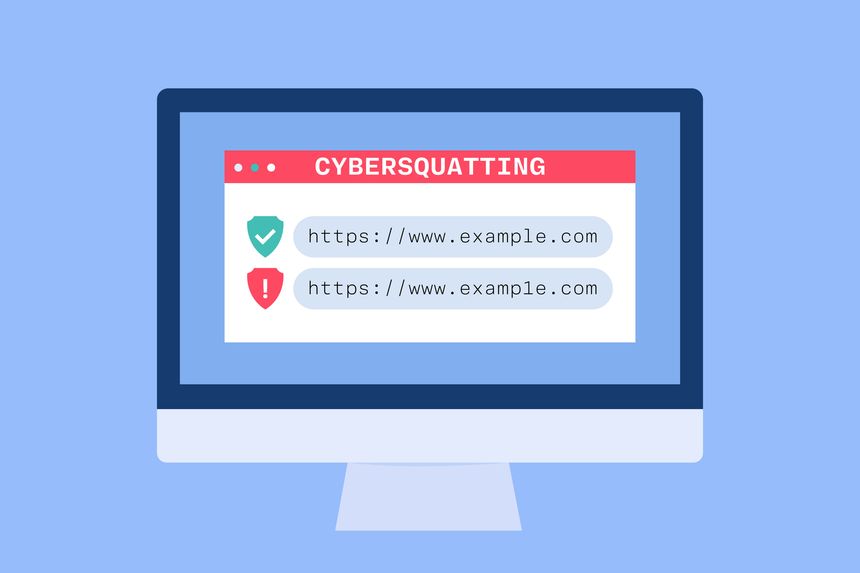
The World Intellectual Property Organization (“WIPO”) administered over 6,200 domain name disputes in 2025. This is the highest annual total in the 25-year history of its Uniform Domain Name Dispute Resolution Policy (“UDRP”). Cumulatively, WIPO has now resolved more than 80,000 cases under the UDRP, comprising over 70,000 disputes involving generic Top-Level Domains (gTLDs) and close to 10,000 involving country-code Top-Level Domains (ccTLDs).
Recent UDRP decisions illustrate some recurring patterns of cybersquatting and domain name infringement, including (i) use of a famous mark with a geographic reference, (ii) use of a famous mark with a generic term, (iii) typosquatting, and (iv) recruitment and employment fraud.
Famous Mark Combined with a Geographic Reference
A common pattern involves pairing a famous mark with a geographic term such as “france”, “norway” or “london”. Far from dispelling confusion, a geographic reference often reinforces it, as users may assume the domain name belongs to a regional office, branch, division or affiliate of the brand owner.
In Virgin Enterprises Limited v. Paul Welba (Case No. D2026-0233), the complainant owns the VIRGIN brand and related marks, including VIRGIN HOTELS marks registered in the UK and US, alongside more than 7,000 domain names incorporating “VIRGIN”. Virgin Hotels itself launched in 2010. The disputed domain name, “virginhotelssuk.com”, was registered in 2025 and reproduced substantial text and images from Virgin Hotels’ own website dating back to 2022.
The panel held that adding “UK” did not avoid confusing similarity, and that the use made of the domain was neither a bona fide offering of goods or services nor legitimate non-commercial or fair use.
Famous Mark Combined with a Generic Term
A second pattern pairs a famous mark with a generic term such as “store”, “shop”, “official” or “support”. In Compagnie Générale des Établissements Michelin v. Name Redacted (Case No. D2026-0009), Michelin, which is renowned both for tyres and for its authoritative restaurant guide, brought a complaint over “michelincuisinetaste.com”. The site displayed the MICHELIN mark alongside culinary content and a log-in/ sign-up portal.
The panel found the mark clearly recognisable within the domain name, with “cuisine” and “taste” reinforcing rather than dispelling any association with Michelin. Awareness of the mark was considered inescapable, particularly as the registrant had already been the subject of several earlier UDRP proceedings brought by Michelin.
Typosquatting
Typosquatting involves deliberate misspellings or character substitutions, such as swapping upper and lower case, replacing letters with similar-looking numerals, and the like. In Sodexo v. Joyce Byrum, Byrum Little World LLC (Case No. D2025-1263), the respondent Byrum registered “s0dexo.net”, substituting the numeral “0” for the letter “o”. Sodexo, a major global food services and facilities management company with numerous SODEXO-formative domain names, showed that the disputed domain was used to send emails impersonating a senior Sodexo employee, soliciting payment of fraudulent invoices and product orders from Sodexo’s clients.
The panel had little difficulty finding bad faith, describing fraud of this kind as among its most egregious forms.
Recruitment and Employment Fraud
Alongside classic typosquatting, an increasing share of disputes sit at the intersection of trade mark law and cyber-fraud targeting job seekers. In Artivion, Inc. v. Domain Administrator (Case No. D2025-1856), the complainant Artivion, originally founded in 1984 as CryoLife, Inc. and renamed Artivion, Inc. in January 2022, challenged “artivioncareers.com”, a pay-per-click website.
The panel found the domain had been used to impersonate Artivion in a scheme soliciting personal information through fake job offers, supported by evidence of actual confusion from a job seeker who queried the legitimacy of an offer received from an email address linked to the domain. The addition of “careers” did not distinguish the domain from Artivion’s marks. If anything, it heightened the impression of an association with Artivion’s recruiting function.
Why Trade Mark Registration Matters
Across all four patterns, one common thread stands out. Every successful complainant relied on registered trade mark rights to satisfy the first limb of the UDRP, which is that the disputed domain name is identical or confusingly similar to a mark in which the complainant has rights. Without a registered mark (or, at minimum, clearly evidenced unregistered rights, which are harder and slower to establish), brand owners have no straightforward standing to invoke the UDRP, regardless of how blatant the infringement or fraud may be.
Registration also strengthens the second and third limbs of the test. A trade mark registration is concrete evidence of legitimate rights that the respondent typically cannot rebut, and a documented history of trade mark registrations, particularly across multiple jurisdictions, makes it far easier to establish that a respondent knew of the mark and registered the domain in bad faith.
Maintaining a robust trade mark portfolio, and pairing it with proactive domain name registration and monitoring, remains one of the most effective tools brand owners have against the rising tide of cybersquatting and domain name infringement.
Subscribe to receive more articles like this here.

/Passle/6130aaa9400fb30e400b709a/MediaLibrary/Images/2026-10-09-10-06-02-856-6ac8bc8a8b2b824748858593.png)
/Passle/6130aaa9400fb30e400b709a/SearchServiceImages/2026-10-08-09-16-14-047-6ac75f5e6e2df5357ce24fc9.jpg)
/Passle/6130aaa9400fb30e400b709a/SearchServiceImages/2026-10-08-08-54-19-301-6ac75a3bd24614eebffad63d.jpg)