
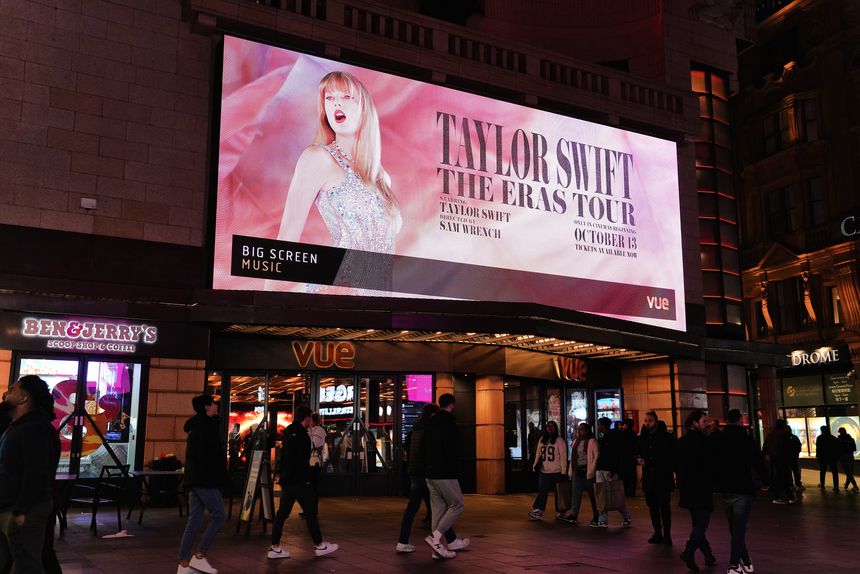
Taylor Swift is known for taking her intellectual property seriously and has vigorously protected her albums and song titles worldwide. Her attempt to register the title of her latest record, “The Life of a Showgirl,” has proven challenging, and she is also facing a trade mark infringement lawsuit filed by a performer named Maren Flagg. Flagg owns a US trade mark registration for “Confessions of a Showgirl” and has used this brand for 12 years, performing a live cabaret show based on her life as a showgirl.
On the registration front, a US examiner has taken the view that Taylor’s mark is confusingly similar to Flagg’s due to the shared “OF A SHOWGIRL” wording, and that Flagg should be protected from “adverse commercial impact due to use of a similar mark by a newcomer” - an interesting choice of words to describe one of the biggest pop stars of our time.
Taylor’s legal team has secured suspension of the application, placing the matter on hold while they address the more pressing infringement lawsuit brought by Flagg in the US.
Flagg’s attorneys’ central argument is that the use of “The Life of a Showgirl” is likely to result in reverse confusion. In other words, Taylor’s use of the brand could overwhelm Flagg’s earlier registration for “Confessions of a Showgirl”, leading the public to believe that “the original is the imitation”.
The case is attracting headlines again following a recent amendment to the claim by Flagg’s attorneys, which mainly concerns technical issues rather than the reverse confusion argument itself.
Flagg’s theatre performances under “Confessions of a Showgirl” have expanded into a book, a podcast, and online video content. On paper, there are clear similarities between these products and Taylor’s “The Life of a Showgirl”.
However, a relevant point raised by Swift’s attorneys is that the wording “OF A SHOWGIRL” is diluted in the marketplace. They cite examples such as “Portrait of a Showgirl”, “The Last Showgirl”, and “Confessions of a Vegas Showgirl”. This supports an argument that Flagg’s rights are not sufficiently strong to challenge Taylor’s use of “The Life of a Showgirl”.
As a UK trade mark attorney, I wonder whether Flagg will be able to successfully argue that any potential association with Swift’s album would have an adverse commercial impact on her offering. It is equally possible that Flagg may financially benefit from the (arguable) similarities between the trade marks.
It is also interesting that Flagg’s concerns may, in part, be amplified by her own lawsuit. If the lesser-known performer is worried about an association between the parties’ brands, bringing a trade mark lawsuit against Taylor Swift may not be the most effective way to avoid it. No doubt Taylor’s team will make this point as well, although US courts will ultimately decide the matter, unless, of course, the showgirls reach a settlement behind the curtains.
Subscribe to receive more articles like this here.

/Passle/6130aaa9400fb30e400b709a/SearchServiceImages/2026-10-08-08-54-19-301-6ac75a3bd24614eebffad63d.jpg)
/Passle/6130aaa9400fb30e400b709a/SearchServiceImages/2026-10-08-09-03-22-078-6ac75c5aef19e2775edf9165.jpg)
/Passle/6130aaa9400fb30e400b709a/SearchServiceImages/2026-10-07-13-35-08-676-6ac64a8c3724c91c5285d065.jpg)