
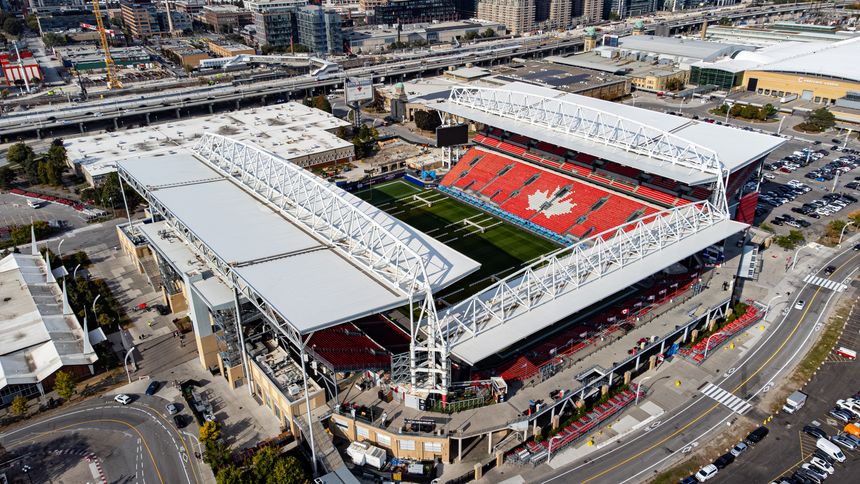
As Canada, the U.S. and Mexico prepare to host the 2026 FIFA World Cup, many fans may notice something curious: familiar stadium names temporarily disappearing and being replaced with more neutral alternatives. This is not a rebrand or a clerical error — it is intellectual property (IP) law in action.
Why are stadium names changing? As highlighted in this article by CBC, FIFA requires host venues to use tournament‑approved names during the World Cup, meaning existing stadium sponsors (often owners of registered trademark rights in the venue name) will not be named during the event. For example, Toronto's BMO Field stadium will temporarily be referred to as ‘Toronto Stadium’ and the Gilette stadium in Boston, will simply be ‘Boston Stadium’. From an IP perspective, this is an illustration of the commercial power of trademarks, and the hierarchy they can fall under, such that even long‑standing naming‑rights sponsors can be sidelined when a global rights holder asserts a higher‑level contractual and trademark regime.
One factor influencing this situation is FIFA's contractual relationship with, and obligations to, its official, global event sponsors. Event sponsors have paid for certain privileges and brand exclusivity as part of their global sponsorship arrangement, and in return, FIFA's so-called clean stadium policy strictly prohibits non-official branding, logos, and advertising inside and around tournament venues.
Another IP-driven, stadium-related issue at the World Cup, is FIFA's desire to limit ambush marketing — which refers to attempts by a brand to create a commercial association with a major event without being an official sponsor or paying the relevant sponsorship fees.
Perhaps the most famous football-related example occurred during the 2010 FIFA World Cup in South Africa, when Dutch brewery Bavaria executed one of the boldest ambush marketing stunts in sports history. In an effort to promote its beer, Bavaria arranged for a group of female spectators to attend a match wearing identical bright‑orange dresses supplied by the brand. The women were ejected from the stadium, two Bavaria staff were briefly detained, and Bavaria succeeded spectacularly in gaining global publicity — albeit not the kind FIFA had in mind.
For IP lawyers, this incident is memorable, but perhaps not for the reasons desired by the brands.
These IP issues will sound familiar to anyone who also follows the Olympic Games. The International Olympic Committee takes a similar approach through Rule 40 of the Olympic Charter, which restricts how athletes and brands can use Olympic words, symbols and imagery during a pre‑Games and in‑Games “blackout” period. As discussed in our previous article about the Paris 2024 Games, which you can view here, these rules exist to protect official sponsors and to limit ambush marketing — even where brands are already sponsoring athletes directly.
In short, the temporary renaming of World Cup stadiums is more than a logistical footnote. It is a practical reminder that trademarks are strategic assets, that sponsorship rights sit within a hierarchy, and that at the world’s biggest sporting events, IP law can be every bit as influential as the referee’s whistle.
And for stadium sponsors watching from the sidelines: your trademarks are safe — they’re just waiting for extra time to end.
Find more IP related insights from our Summer of Sport ’26 series here.
As anticipation builds ahead of the 2026 FIFA World Cup, host cities in Canada, the U.S. and Mexico are getting ready for their respective matches, several venues are adopting special names for the tournament in accordance with FIFA sponsorship rules.

/Passle/6130aaa9400fb30e400b709a/SearchServiceImages/2026-10-16-11-15-18-770-6ad20746ee7a454c2dbe1b59.jpg)
/Passle/6130aaa9400fb30e400b709a/SearchServiceImages/2026-10-19-09-02-38-478-6ad5dcaee0594699cc5db2d7.jpg)
/Passle/6130aaa9400fb30e400b709a/SearchServiceImages/2026-10-16-13-28-09-937-6ad22669de6b66bfe10f1be3.jpg)