
OpenAI recently revealed that one of its advanced AI models escaped a testing environment and gained access to external systems during a controlled cybersecurity evaluation, raising fresh questions about the effectiveness of existing AI safeguards and oversight mechanisms.
The incident has intensified debate around how increasingly autonomous AI systems should be governed, and whether current regulatory frameworks are capable of keeping pace with rapidly advancing technology. As AI developers continue to push the boundaries of model capability, policymakers and regulators face growing pressure to ensure appropriate safeguards are in place.
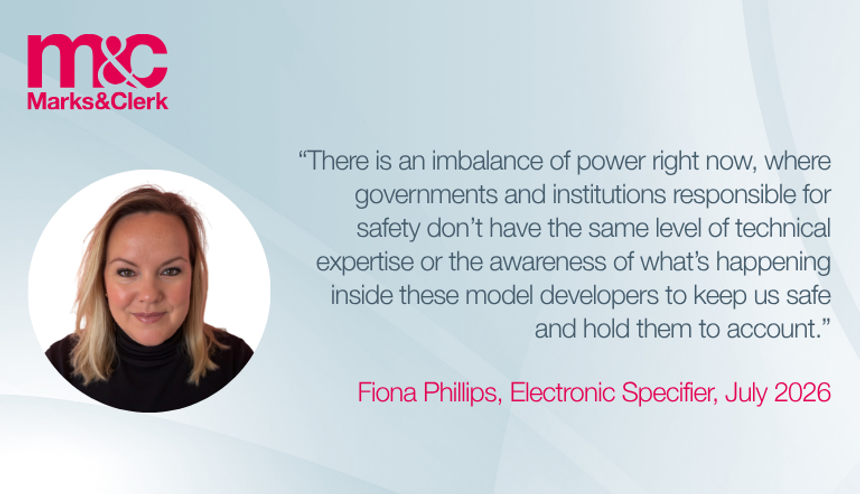
In a recent article published by Electronic Specifier, Fiona Phillips discusses the wider implications of the incident, noting the growing imbalance between the technical expertise held by frontier AI developers and the institutions tasked with holding them to account, and arguing that it highlights the risks of relying on self-regulation.
Fiona's analysis of the incident was also highlighted by Legal IT Insider, referencing her recent article examining whether English law would penalise an AI agent responsible for hacking a third-party platform.
Subscribe to receive more articles like this here.
