
This article was prepared with our summer student Rachel Chen.
Amid ongoing geopolitical and trade tensions – and a broader resurgence of national pride, including heightened public attention around international events such as the FIFA World Cup hosted in part on Canadian soil – Canadian consumers continue to prioritise domestically sourced products. This sustained focus on “buying Canadian” has become a defining feature of the current marketplace.
Various businesses have responded by increasingly incorporating Canadian-themed branding and country-of-origin claims into their marketing, including the use of maple leaf imagery and phrases such as “Proudly Canadian.” While these strategies can be commercially effective, they also carry legal risk. Inaccurate or misleading representations regarding the origin of goods may attract scrutiny under Canada’s competition and advertising laws.
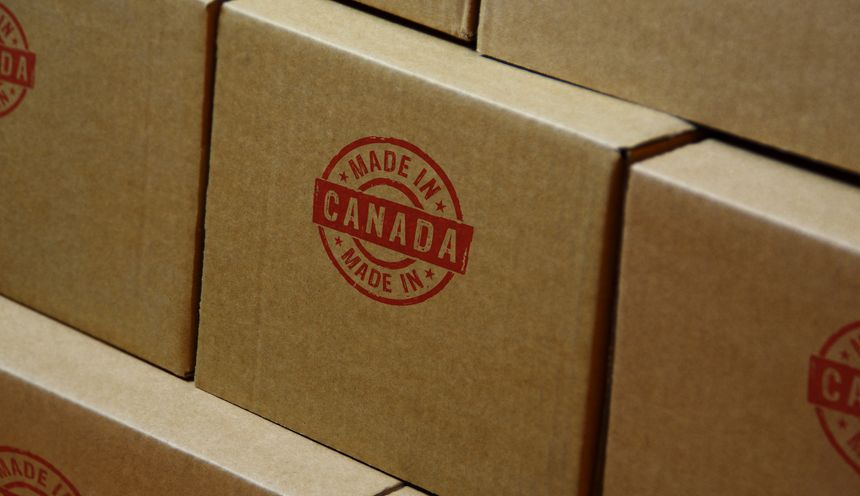
In this environment, businesses should ensure that claims relating to Canadian origin are not only compelling, but also compliant. Representations such as “Made in Canada,” “Product of Canada,” and similar claims are regulated under the Competition Act, administered and enforced by the Competition Bureau (the “Bureau”). When used in advertising, such claims are also subject to the Canadian Code of Advertising Standards, administered by Ad Standards, a national not-for-profit self-regulatory body. Importantly, the Competition Bureau also considers use of Canadian design indicia, such as the maple leaf, and so care should also be exercised when using such designs.
This article aims to provide an overview of the Canadian legal and regulatory framework governing Canadian country-of-origin claims. It also highlights key considerations arising from the Bureau’s guidance and Ad Standards’ interpretive approach to help businesses mitigate risk when making “Canadian” claims.
Statutory Framework
Relevant Legislation:
The Bureau is responsible for administering and enforcing the following federal statutes:
- the Competition Act;
- the Consumer Packaging and Labelling Act (CPLA), which applies to non-food products;
- the Textile Labelling Act (TLA); and
- the Precious Metals Marking Act.
The Bureau released updated guidelines on March 7, 2025, which outline its approach to assessing “Product of Canada” and “Made in Canada” claims for compliance with the Competition Act, the CPLA, and the TLA. These statutes contain complementary provisions prohibiting the making of false and misleading representations, which apply to country-of-origin claims, among other things. While these statutes do not require that a product’s country of origin be identified, they do prescribe requirements for when such claims are made.
When determining whether a claim is false or misleading under the Competition Act, the Bureau (or court) will consider the general impression it conveys to consumers, in addition to its literal meaning, through the combination of words, visual elements, and illustrations used in or with the representation, as well as its overall layout. Non-compliance may give rise to both civil and criminal consequences.
Penalties for Non-Compliance:
The Bureau may investigate potential cases of non-compliance and typically seeks voluntary compliance or negotiated resolution where appropriate. Where settlement is not possible, or is inappropriate under the circumstances, the Bureau will pursue enforcement through litigation.
Penalties for non-compliance can be significant. Under the civil provisions of the Competition Act, corporations may face administrative penalties of up to the greater of (i) $10 million CAD ($15 million CAD for each subsequent violation); and (ii) three times the value of the benefit derived from the deceptive conduct (or 3% of worldwide gross revenue if the benefit cannot be determined).
Criminal prosecution, while uncommon, may be pursued where representations are made knowingly or recklessly and prosecution is in the public interest. Conviction may result in substantial fines and/or imprisonment, including up to 14 years on indictment.
By contrast, violations under the CPLA and TLA are subject to lower fines, generally up to $10,000 CAD.
Overview of the Competition Bureau Guidelines
“Product of Canada” and “Made in Canada” Claims:
Compliance with “Product of Canada” and “Made in Canada” claims requires consideration of whether goods have undergone their last “substantial transformation” in Canada. This requires that the goods either undergo a fundamental change in form, appearance, or nature, while in Canada, such that the goods existing after the change are new and different from those existing before the change; or that they are wholly obtained or produced in Canada.
“Product of Canada” claims are the most stringent of the origin claims. The Bureau generally will not challenge a “Product of Canada” claim provided the following two conditions are met: (i) the last “substantial transformation” of the good occurred in Canada; and (ii) at least 98% of total direct costs of producing or manufacturing the good have been incurred in Canada.
In contrast, the Bureau has advised that it will generally not challenge a “Made in Canada” claim when the following three conditions are met: (i) the last substantial transformation of the good occurred in Canada; (ii) at least 51% of the total direct costs of producing or manufacturing the good have been incurred in Canada; and (iii) the representation is accompanied by an appropriate qualifying statement (i.e., one that clearly discloses the composition of the product), such as “Made in Canada with imported parts”.
For products that fall below the threshold for “Made in Canada” or “Product of Canada” claims, the Bureau recommends use of accurate, specific, and qualified alternatives, such as “Assembled in Canada with foreign parts” or “Designed in Canada”, provided such claims do not create a false or misleading general impression. The Bureau has also advised that vague terms, such as “manufactured” or “produced” in Canada are likely to be understood by consumers as synonymous with a “Made in Canada” claim, and that accordingly, such claims should comply with “Made in Canada” claim requirements if they are used.
Use of the Canadian Flag and the 11-Point Maple Leaf:
As noted above, when claims are subject to scrutiny under the deceptive marketing provisions of the Competition Act, assessment involves considering the general impression the claim conveys to the public. This involves consideration of any pictorial representations (such as symbols, logos, designs, etc.), use of colour and colour combinations, and other design features used in or with the claim. Such features may influence purchasing decisions as much as express claims. Accordingly, use of the Canadian flag, a maple leaf, or even a red and white colour combination, could be considered to be false and misleading under the Competition Act, depending on the circumstances.
Canada’s National Flag, including the 11-point stylized maple leaf that appears in its center (pictured below), is one of many prohibited marks under Canada’s Trademarks Act, meaning neither can be lawfully used in association with a business, as a trademark or otherwise, without consent from the Canadian government.

Distinctions arise, however, in respect of how these symbols are treated in practice.
Use of the Canadian flag generally requires express consent from the Department of Canadian Heritage.
With respect to the 11-point maple leaf, the Canadian Intellectual Property Office (“CIPO”) updated its practice on November 12, 2025 to streamline the registration of trademarks and industrial designs incorporating the symbol. In particular, CIPO no longer requires applicants to disclaim exclusive rights to the maple leaf and no longer refuses industrial design applications on public order grounds solely on the basis that the design incorporates the symbol. Even so, generally the following three conditions should be met, with the last two pertaining to use in respect of a trademark:
- the use of the design or trademark conforms to good taste;
- an applicant for the registration of such design or trademark disclaims, in any application, the right to the exclusive use of the maple leaf; and
- the owner of such design or trademark will not attempt to prevent anyone else from using the maple leaf.
It is important to note that these changes relate to registrability only and do not, in themselves, confer a substantive right to use the 11-point maple leaf. Applicants remain responsible for ensuring that their use complies with applicable legal requirements, including section 4 of Order in Council P.C. 1965‑1623. Government guidance indicates that applicants should consider obtaining consent from the Department of Canadian Heritage prior to use. While the precise scope of any consent requirement is not uniformly articulated, seeking such consent remains a prudent step.
Finally, compliance with the trademark-related requirements does not preclude the applicability of other relevant legislation. That is, it is possible for a business to use the 11-point maple leaf in a way that is permissible under the Trademarks Act, but that violates the Competition Act, CPLA, or TLA, if its use is false or misleading under the relevant provisions of those acts.
More broadly, businesses should exercise caution when using symbols or imagery that may evoke a Canadian nexus. This includes not only official national symbols such as the Canadian flag or the 11-point maple leaf, but also well-known Canadian landmarks or icons. In some cases, the commercial use of such imagery may also be subject to separate legal or commercial restrictions – for example, commercial use of certain landmarks, such as the CN Tower, may require permission from the relevant rights holder.
Overview of the Ad Standards Guidelines
Apart from legal enforcement, businesses may also face scrutiny from Ad Standards when a false or misleading representation is used in advertising. Although Ad Standards does not impose legal penalties, its decisions can carry reputational and commercial consequences.
As noted above, Ad Standards is responsible for administering and enforcing the Canadian Code of Advertising Standards (the “Code”), which sets out the criteria for acceptable advertising in Canada. Among other things, Ad Standards: publishes guidance documents related to compliance with the Code, provides advertising preclearance services for businesses, provides a process for consumers to file complaints for non-compliance with the Code, and investigates consumer complaints. While Ad Standards does not have legal enforcement powers, it may request removal or correction of an advertisement found to be in violation of the Code, and it may publicly report on non-compliant advertisers.
Complaints related to country-of-origin claims, such as "Made in Canada", "Proudly Canadian", and "Buy Canadian", are adjudicated by Ad Standards under Clause 1 of the Code, which outlines criteria relating to the “accuracy and clarity” of advertisements. Under Clause 1, advertisements must not contain, or directly or by implication make, inaccurate, deceptive, or misleading claims, statements, illustrations, or representations.
Ad Standards has published an advisory on the meaning of “Made in Canada” and similar claims under the Code. Among other things, Ad Standards advises that:
- claims that imply Canadian content or origin, whether express or implied, should comply with the Bureau’s guidance;
- when a business sells products that are made outside of Canada, in addition to products made in Canada, it must make sure that all “Made in Canada” claims are appropriately modified or placed in a way that makes it clear that the claim relates to specific products only; and
- a business should not use terms like “Truly/Proudly Canadian” if it is not Canadian-owned, even if it has locations or leadership within Canada.
Conclusion
While “Made in Canada”, “Product of Canada” and other similar country-of-origin claims (including implied claims by using the maple leaf and other Canadian designs) can provide a competitive advantage, they also present material legal and reputational risk where such claims are used without ensuring compliance. Businesses should ensure that such claims are accurate, properly substantiated, and aligned with applicable regulatory guidance. In addition to express claims, visual elements – such as symbols, colours, and imagery – may convey a Canadian nexus and must be used with care to avoid creating a false or misleading impression.
This includes not only national symbols, but also well-known Canadian landmarks and imagery. In some cases, such uses may raise separate legal or commercial considerations – for example, certain landmarks may be subject to restrictions or licensing requirements for commercial use.
This article is intended to provide general information only and should not be relied on as legal advice. or further information or assistance regarding Canadian marketing and advertising practices, please contact a member of our trademarks team.
Subscribe to receive more articles like this here.


/Passle/6130aaa9400fb30e400b709a/SearchServiceImages/2026-10-23-08-18-54-691-6adb186ebd29a7ce1f63fc00.jpg)
/Passle/6130aaa9400fb30e400b709a/MediaLibrary/Images/2026-10-21-11-59-19-999-6ad8a9179207ce3b4702378c.png)
/Passle/6130aaa9400fb30e400b709a/SearchServiceImages/2026-10-16-11-15-18-770-6ad20746ee7a454c2dbe1b59.jpg)