
This week’s Dragons' Den was another master class in why patent protection is vital, not only for the protection of your invention, but also in helping secure investment.
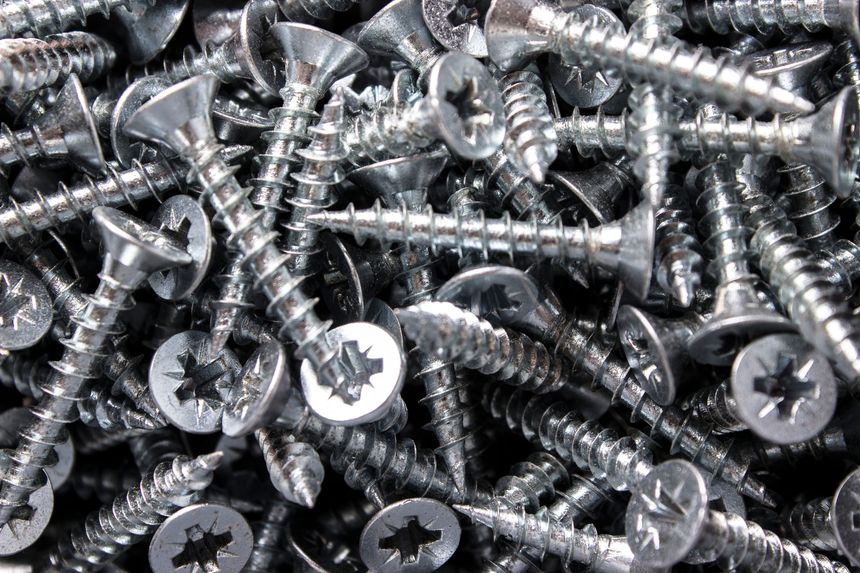
The Screw Caddy was unveiled by the O'Donnell family as their solution to the problem of wobbling screws. The Screw Caddy is an innovative device to hold screws in place as they are screwed into a surface. This mitigates risks such as screw deflection which DIYers face. In their initial pitch, John O'Donnell said that their invention is “patent pending”. Since the filming of the show, they have a granted patent in the UK (GB2621166B).
During the initial questioning by the dragons, it became apparent that the O'Donnell family didn't need help with the innovation side of their business but with the marketing and sales. Their initial ask was for £50,000 for 40% of their business illustrated this. While it’s not unusual to see large equity requests in the Den, these are typically supported by healthy sales figures or ambitious growth prospects. At the time of filming Screw Caddy had achieved only £80 in turnover. It is clear that O’Donnell’s were looking for a dragon to help run the business, not just be a silent partner. Often, this sends the Dragons running but the power of having a patent for your invention quickly became apparent.
Steven Bartlett raised concerns about the product and whether it actually solved the problem of preventing screw wobble and potentially injuring of DIYers. However, Deborah Meaden defended the product and hit the nail on the head with her question: “What's your patentable step?”
Merely saying that your product is “Patented” or “Patent Pending” may entice investors or increase sales but if you dig deeper into what is actually being protected by the patent it is important that it covers the product you are selling. From John O’Donnell’s description of the claim, the part of a patent which outlines the scope of protection of the patent, and from briefly looking at their recently granted patent, it seems that their patent broadly protects their product. This is key as it means the patent is in a stronger position to prevent competitors from copying their ideas, not just the direct product itself.
Deborah Meaden clearly understood the importance of the patent and what it relates to. For her, the patent was not just a marketing line; it was a strategic asset giving the Screw Caddy a defensible market position.
Peter Jones raised concerns over the Screw Caddy’s value. With a retail price of £4.99, the Screw Caddy is relatively expensive compared to the screws that it would be sold alongside. However, he then suggested licensing the invention to screw companies. This outlined another key advantage of having strong patent protection for your product. Patents may be licensed to other companies, allowing them to sell the invention or, as Peter Jones suggested, including it in a pack of screws as a freebie. There are multiple ways in which a patent may be licensed. An exclusive or sole licence could be used to allow a single company to manufacture and sell the Screw Caddy or non-exclusive licences could be used to allow multiple companies to manufacture and sell the Screw Caddy. Either way, licences provide a powerful tool for inventors to allow them to profit off their invention without having to worry about the marketing and sales of their products.
Peter Jones then referenced one of Deborah Meaden’s success stories. In 2014, Gripit entered the Den with their product, a plasterboard fixing designed for heavy items. They were in a similar situation to Screw Caddy. They had strong patent protection but lacked business experience. Deborah Meaden took a chance on Gripit and invested. After their appearance on Dragons' Den, Gripit saw huge growth. Proving the value in patents as a tool in business.
In the end, Deborah Meaden offered of £50,000 for a 30% stake in their business, which the O’Donnell’s quickly accepted. Once again, Dragons' Den has shown that strong IP can be the deciding factor in securing investment.
Not every entrepreneur will pitch in the Den, but the lessons learned about IP strategy and licensing apply universally.

/Passle/6130aaa9400fb30e400b709a/SearchServiceImages/2026-03-13-11-23-25-587-69b3f3ad075a444adaa529d0.jpg)
/Passle/6130aaa9400fb30e400b709a/SearchServiceImages/2026-03-12-12-00-42-323-69b2aaea65124f609d60b8e8.jpg)
/Passle/6130aaa9400fb30e400b709a/SearchServiceImages/2026-03-12-15-00-33-883-69b2d511075a444adaa0da03.jpg)