
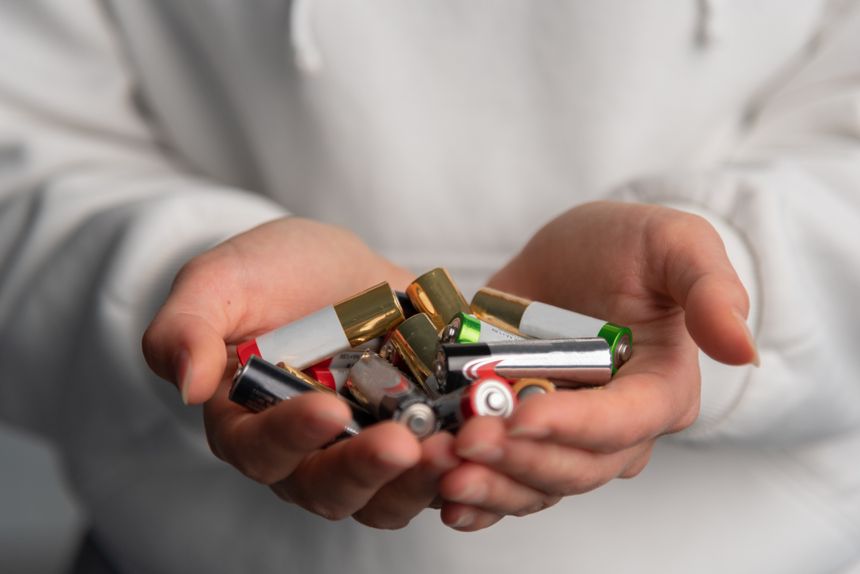
Sodium-ion batteries, NIBs for short, are fast emerging as a pivotal technology in the energy space, for electric vehicles, renewable energies, portable electronics etc. Compared to their well-established and widespread lithium-ion battery, LIBs for short, ‘friends’, they have clear advantages in terms of both sustainability and cost – helped by sodium being the sixth most abundant element on Earth and not confined to specific geographical areas. The challenge has been to create NIBs that have energy densities and charging speeds comparable to that of LIBs.
Some background and the breakthrough
Researchers at the Tokyo University of Science (herein the Researchers) have used a new carbon-based electrode to improve the energy density and charging speeds of NIBs, a breakthrough that may also help improve the safety of batteries.
Batteries contain two electrodes, an anode and a cathode, which determine how current flows into and out of the device. An electrolyte transports ions between the cathode and anode. For LIBs, the cathode is primarily made of graphite due to its excellent ability to store lithium ions for later discharge. For NIBs, a hard carbon (HC) is used due to its excellent ability to store sodium ions for later discharge.
HC is a porous combination of structural units, a complex crystalline structure, which, in theory, should be a very fast charging material. It is believed that sodium ions aggregate into tiny pseudo-metallic clusters within HC nano-pores in a ‘pore filling’ process. However, previous research into HC found difficult to realise this fast charging rate in practice – one problem was that it appeared the ions were experiencing a slowdown similar to a traffic jam on entering the HC.
Using various models and simulations to look into and address this, the Researchers instead combined small concentrations of HC with aluminium oxide to form a combined electrode. This seemed to allow the ions to flow more freely into the HC without experiencing the above-mentioned ‘traffic’ issues. The Researchers then found that the sodium ions could enter HC at similar rates to that of lithium ions entering graphite. In addition, after careful analysis, the Researchers found that sodium ions require less energy to form their clusters meaning that, under the right conditions, SIBs would be able to achieve even faster charging rates than LIBs.
A key point of focus for the Researchers going forward is to attain even faster kinetics of the pore filling process.
What does this mean?
These results could help NIBs become more widely adopted for uses requiring incredibly fast charging/discharging rates e.g. in grid-scale energy storage systems. Such high energy density batteries are also essential for storing electricity generated by solar and wind farms, meaning that NIBs could be a key enabler in the shift towards the use of renewable energy systems. Previous research has also shown that NIBs are safer than LIBs since the sodium ions are less prone to the chain reaction that causes LIBs to burn or explode when damaged. This could help eliminate such safety issues associated with current batteries.
This is of course a huge breakthrough for the energy space, with global LIB capacity exceeding 2,400 GWh in 2023 and expected to reach 4.7 TWh by 2030, and with NIBs seeming to promise a better and safer alternative to the current LIBs – and may make 2026 a very interesting year!
At M&C, we’re always very excited to hear about technological advancements, and we have specialist teams that focus on protecting intellectual property in the energy sector as well as for any green technologies. If you have any questions on any of the above, and/or would like to know more about protecting any intellectual property you may have in these areas, please don’t hesitate to get in touch with Annabel Williams or your usual M&C contact.
Sources of information:
https://techxplore.com/news/2026-02-physics-anode-sodium-ion-batteries.html
https://www.batterytechonline.com/market-analysis/7-companies-developing-sodium-ion-battery-technology
https://www.livescience.com/technology/engineering/days-numbered-for-risky-lithium-ion-batteries-scientists-say-after-fast-charging-breakthrough-in-sodium-ion-alternative

/Passle/6130aaa9400fb30e400b709a/SearchServiceImages/2026-03-24-14-34-18-093-69c2a0eaee2a9b0415772030.jpg)
/Passle/6130aaa9400fb30e400b709a/SearchServiceImages/2026-03-24-14-09-42-790-69c29b269a4a5774cbfd67e3.jpg)
/Passle/6130aaa9400fb30e400b709a/SearchServiceImages/2026-03-19-18-36-26-327-69bc422ae368b2867c18fd50.jpg)