
On 22 December 2025, the Court of Appeal handed down the latest judgment in the wider Abbott v Dexcom dispute with Sir Colin Birss providing the substantive judgment.
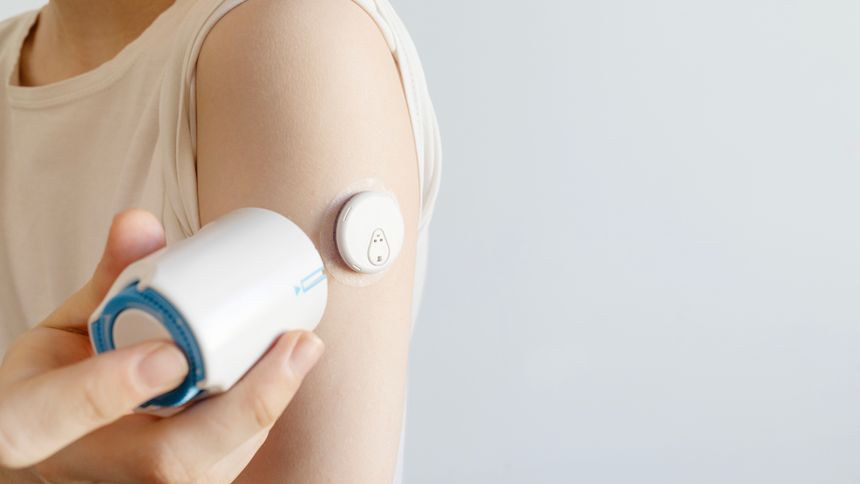
The decision concerned two Abbott patents which related to Continuous Glucose Monitoring (CGM) technology. EP 627 related to aspects of the user interface (UI) and EP 223 related to the validation, and enablement, of safety critical software. At first instance Mr Justice Mellor held both patents invalid for lack of novelty, and novelty was the sole issue before the Court of Appeal in relation to both patents. Due to a settlement of the broader dispute, Dexcom did not appear before the Court of Appeal and the Comptroller General assisted the Court in accordance with Practice Direction 52D. The Court of Appeal allowed Abbott’s appeal and held that the patents were not anticipated.
Two points of particular interest arising from this judgment: the correct approach to anticipation, and the correct approach to claim construction.
Correct Approach to Anticipation
Sir Colin Birss explained that anticipation can be explicit, necessarily and unambiguously implicit, or an inevitable result of following the prior art. Moreover, whilst evidence that something is possible or obvious may have a role to play in a case about inventive step, it is not relevant to questions of novelty. This issue was important to the appeal of EP 223 which was, at first instance, held to be anticipated by prior art referred to as “Gejdos”. EP 223 described an invention which would check whether an application was installed properly and functioned properly. If the checks failed then safety-critical features would be disabled whilst non-critical features would be enabled. If the checks succeeded then operation was unrestricted. Gejdos was a healthcare management software system with a patient database. It included database integrity checks (e.g. confirming units of measurements were correct) and, if those checks failed, an error message was shown. At first instance, in relation to Gejdos, Dexcom’s expert said that “the skilled person would understand that [the failure and subsequent error message] includes disabling database related functions when the database integrity check fails. These features are safety critical”. In other words, the evidence supported the argument that, despite no explicit disclosure, Gejdos implicitly disclosed the selective enablement integer of the claim. The Court of Appeal held that Gejdos simply disclosed the display of an error message; there was no explicit disclosure of selective enablement. Moreover, the expert’s statement that a skilled reader would “understand” that the functions would be disabled (i.e. implicit disclosure) was not enough. Ultimately, there was insufficient evidence to uphold the finding of anticipation in light of Gejdos and the appeal was allowed.
Correct Approach to Claim Construction
Whilst the appeal formally concerned findings on novelty, the outcome was heavily guided by how the claims themselves should be construed. This was particularly true for the EP 627 patent. Sir Colin Birss reaffirmed the principles from Activis v Eli Lilly and Saab Seaeye v Atlas Elektronik. Namely, that the construction exercise must be: (a) through the eyes of the appropriate skilled person at the time of the disclosure; (b) contextual rather than overly literal; (c) purposive, but fundamentally still concerned with the meaning of the language used; and (d) carried out with respect to the disclosure of the document as a whole. Sir Colin Birss recognised the benefit in breaking down a claim into its constituent integers but strongly warned against falling into the trap of failing to see claims as a whole – “missing the wood by focusing on the trees". A further warning was given in relation to claim breadth, with Sir Colin Birss noting that “where a claim uses general non-exhaustive language, it is not normally permissible to read that language ‘down’ so as to construe the patent narrowly if the patentee has chosen not to do so” and “where a claim uses specific exhaustive language, it is equally inappropriate to read that language ‘up’ so as to construe the patent broadly”. Indeed, the correct approach is “simply to interpret the claim as the objective skilled person would understand the author to have intended, i.e., no more or less restrictedly than is necessary to give effect to his purpose”.
The invention at the heart of EP 627 dealt with how a CGM device provided alert notifications (e.g. an audible alert of an impeding hyperglycaemic event) whilst users were engaged in another task on the device. More specifically, claim 1 required:
1.1 executing, on a receiver unit (104, 106), a predetermined routine associated with an operation of an analyte monitoring device (1010);
1.2 detecting a predefined alarm condition associated with the analyte monitoring device (1020);
1.3 outputting, to a user interface of the receiver unit, a first indication associated with the detected predefined alarm condition during the execution of the predetermined routine (1030); and
1.4 outputting, to the user interface of the receiver unit, a second indication associated with the detected predefined alarm condition (1040); wherein
1.5 the second indication is output after the completion of the execution of the predetermined routine;
1.6 the predetermined routine is executed without interruption during the outputting of the first indication;
1.7 the first indication includes a temporary indicator and,
1.8 further, the second indication includes a predetermined alarm associated with the detected predefined alarm condition; and
1.9 the predetermined routine includes one or more processes that interface with the user interface of the receiver unit
A predetermined routine could be, for example, checking historical data. A predefined alarm condition could be, for example, a blood sugar reading of a particular level. A first indication could be, for example, an audible beep. A second indication could be, for example, a louder audible beep.
At first instance it was held that EP 627 was anticipated by a Dexcom user manual referred to as “the STS Guide”. The STS Guide disclosed a 3-day sensor expiry countdown that generated a number of warnings including, for example, a 6-hour expiry notification shown on screen, a 30-minute expiry notification shown on screen with accompanying vibration, and a 0-hour expiry notification shown on screen with accompanying vibration. At first instance it was held that the countdown constituted a “predetermined routine”, that the 30-minute alert corresponded to the first indication, and that the 0-hour alert corresponded to the second indication. It was also found at first instance that as both indications related to same alarm condition (sensor expiry), EP 627 was anticipated.
Abbott submitted two grounds of appeal (dealt with in reverse). Ground 1(b): that a countdown of time is not a “predetermined routine”, and the routine must be something capable of being interrupted. Ground 1(a): that the first and second indications in the STS Guide did not relate to the same predefined alarm condition. More particularly, that 30-minutes until expiry warning is not the same as a 0-hour warning of actual expiry.
In relation to ground 1(b), the Court of Appeal held that the skilled person would interpret the claim “as a whole and in the context of the patent as a whole” and would understand that the indications must be caused by something separate to the predetermined routine. Only then can it then be meaningful to contemplate whether or not the indications could and should interrupt the predetermined routine. The STS Guide countdown and the accompanying alerts were held by the Court of Appeal to be single process which cannot logically interrupt itself. Further, integer 1.9 required that the predetermined routine included one or more processes that interface with the UI of the receiving unit. In seeking to make sense of this integer, Sir Colin Birss held that, “reading the claim as a whole, it is apparent that as a matter of drafting the requirement for a process which interfaces with the user interface at integer 1.9 was intended by the author to be a different thing from the references at 1.3 and 1.4 to outputting indications to the user interface”. Moreover, if “indications satisfying 1.3 and 1.4 also satisfied 1.9, then the latter requirement would be surplusage”. Accordingly, the skilled person would understand that the indications referred to in 1.3 and 1.4 could not be aspects of the predetermined routine; they must be something separate, and therefore through the eyes of the skilled person the prior art could not be novelty destroying.
Ultimately, the Court of Appeal held that the skilled person would not construe claim 1 so broadly as to include the STS Guide system and that reading the claim onto such a process “contorts the claim out of shape in a manner which no skilled person would think the author had intended”. The appeal on ground 1(b) was allowed.
In relation to ground 1(a), the Court of Appeal emphasised that the key issue was whether the STS Guide system was a process falling within the claim properly construed. It was held that this was not the case with Sir Colin Birss explaining that whilst it was accepted that actual expiration of the sensor was a condition, and the fact that there was 30 minutes to go before expiry was also a condition, the two are distinct conditions. It was held that the two notifications did not relate to the same condition (as required by the claim) and thus the appeal was allowed on ground 1(a).
Closing Thoughts
This judgment should remind litigants of the importance of not blurring the lines between evidence supporting anticipation attacks and obviousness attacks. For anticipation attacks, if the relevant feature is not explicitly disclosed then it must be “necessarily and unambiguously” disclosed or an inevitable result from following the prior art; evidence must be given to support that contention. It is not enough to simply claim that a skilled person would “understand” or find the missing feature obvious.
The judgment also provides a valuable restatement of principles of claim construction, particularly for medical technology and software-enabled devices. In particular, it is essential to not fail to see the wood for the trees by overly focussing on individual claim integers and taking an overly mechanistic approach; claims must be interpreted as a whole.


/Passle/6130aaa9400fb30e400b709a/SearchServiceImages/2026-04-02-06-54-46-395-69ce12b6765ae4778cc07d20.jpg)
/Passle/6130aaa9400fb30e400b709a/SearchServiceImages/2026-04-01-20-57-55-819-69cd86d3705f46f2d4c868f5.jpg)
/Passle/6130aaa9400fb30e400b709a/SearchServiceImages/2026-04-01-14-51-37-115-69cd30f92f273dfa89068159.jpg)