
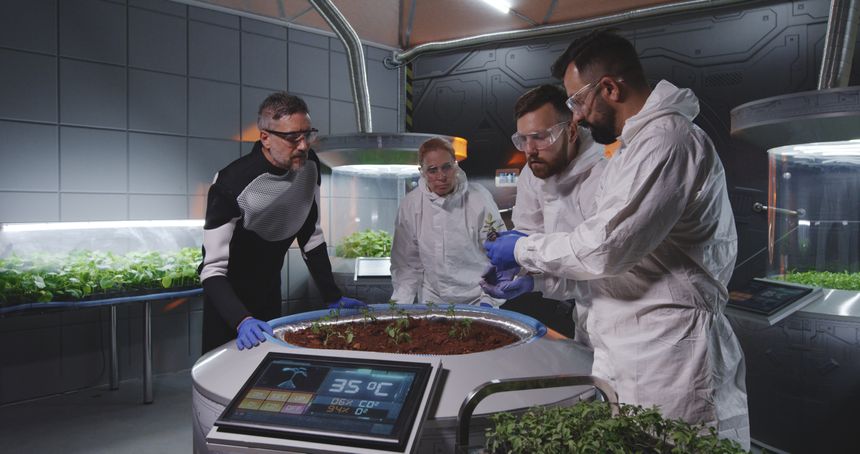
Space agriculture plays a crucial role in sustaining life within closed environments such as long-duration space missions and planetary bases. Examples of space farming technologies that have been developed include hydroponics, aeroponics, controlled environment systems, and bioengineering of plant genetics.
Hydroponics and aeroponics eliminate the need for soil by supplying nutrients directly through water. In hydroponics, plant roots are submerged in a nutrient-rich solution, while in aeroponics, plants’ exposed roots are sprayed with a fine mist of a nutrient-rich solution. These systems enable plants to receive water and nutrients while offering space-saving and improved water efficiency compared to traditional soil-based methods. Hydroponic and aeroponic systems are often integrated with controlled environment systems. Controlled environment systems are designed to regulate factors such as temperature, humidity, light, and air quality, creating optimal conditions for plant growth. From the bioengineering aspect, crop genetics can be modified to increase plant growth performance, nutritional value, and tolerance to environmental stresses. Together, these technologies allow crops to be grown even in harsh conditions with little or no arable land, limited water resources, and harsh environmental challenges.
How are space technologies transferred into applications on Earth?
To address similar challenges of food production, space farming technologies have been adapted into various practical applications on Earth.
Vertical Farming
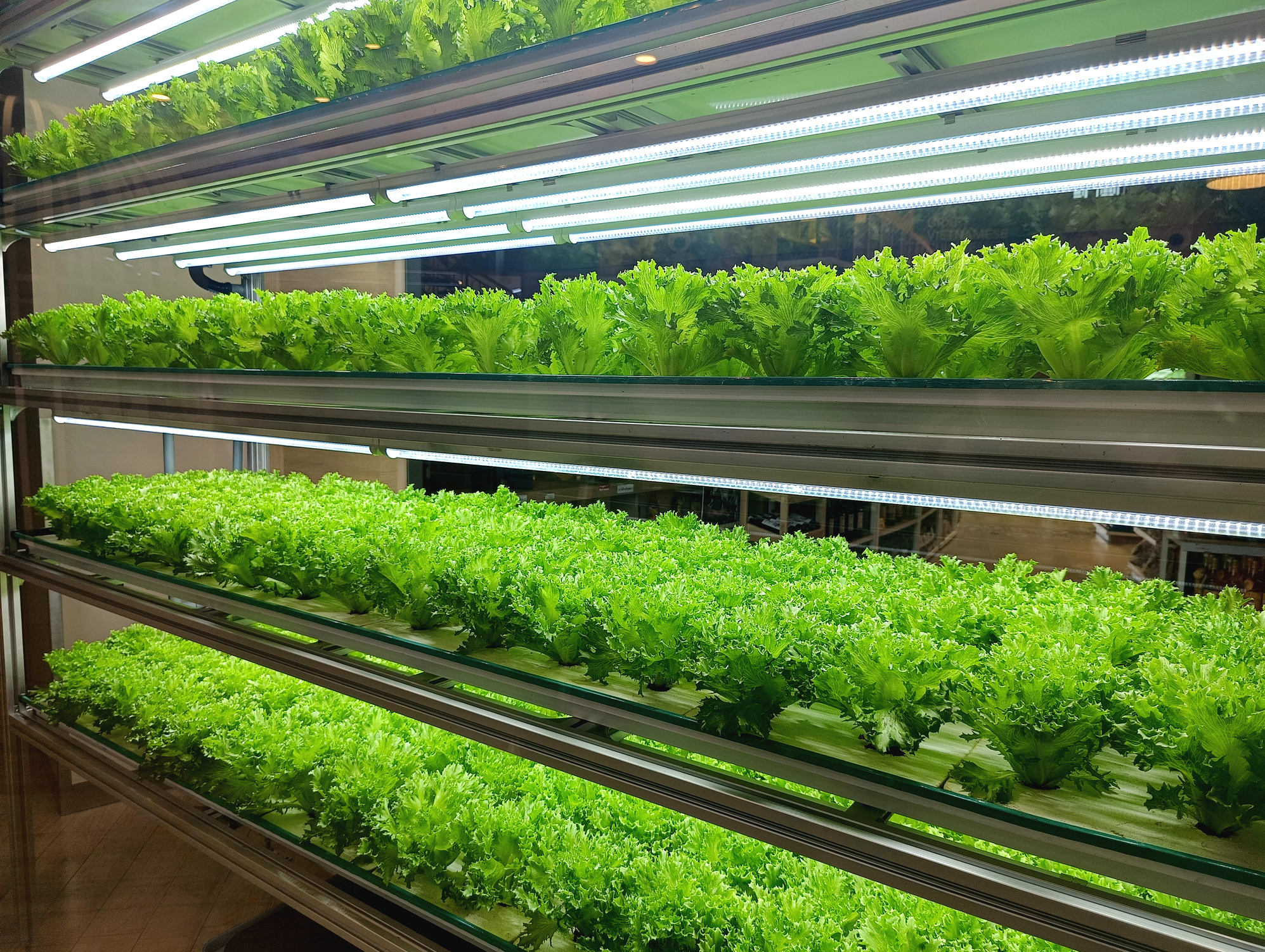
Vertical farming involves growing crops in stacked layers within controlled indoor environments, using techniques such as hydroponics, aeroponics and LED lighting. These techniques allow for consistent, high-quality crop yields regardless of weather and season, providing greater access to fresh produce. Further, because of its layered design, vertical farming uses less land, making it especially valuable in urban areas where land is limited and expensive. Aside from food production, vertical farming systems are also being adapted for urban gardening.
Indoor Smart Gardens
Inspired by the methods developed for growing food in space, indoor smart garden systems automate watering, nutrient delivery and LED lighting so plants can thrive with minimal effort. Because of these features, outdoor garden spaces are not required, and anyone can grow fresh herbs, vegetables, flowers and small fruits in their homes.

Desert Farming
Desert farming adapts space farming technologies to turn arid land into productive agricultural space. Using technologies such as hydroponics and controlled environment systems (e.g. greenhouses) to provide optimal plant growth conditions, countries such as China, Saudi Arabia, and the United Arab Emirates have been transforming desert regions into productive farmland for growing crops. These developments not only improve food security but also demonstrate how space-inspired farming solutions can make better use of limited water and land.
Stress-Resilient Crops
Space research on plant growth has helped identify genetic traits associated with drought tolerance, nutrient efficiency, and rapid growth. These findings contribute to the development of crop varieties that are better adapted for agricultural applications on Earth.
Precision and Sustainable Agriculture
Space technologies such as satellite-based data, navigation systems, and remote monitoring tools support precision and sustainable agriculture. Farmers can use these technologies to monitor weather conditions, soil conditions, crop health, and moisture level across areas of farmland. This strategy allows for accurate planting, targeted irrigation and fertilization thus providing improved agricultural productivity and efficient resource use.
As climate change increasingly threatens food security, space farming technologies are emerging as promising solutions for the future of food production.

/Passle/6130aaa9400fb30e400b709a/SearchServiceImages/2026-03-24-11-50-14-823-69c27a76ee2a9b041575cf70.jpg)
/Passle/6130aaa9400fb30e400b709a/SearchServiceImages/2026-03-19-16-31-17-625-69bc24d58863aa22076d740d.jpg)
/Passle/6130aaa9400fb30e400b709a/SearchServiceImages/2026-03-11-15-55-54-366-69b1908a16246e5d37819a7a.jpg)