
The National Aeronautics and Space Administration (NASA) is a U.S. government agency responsible for the United States’ civil space program and for research in aeronautics and space exploration. Since being established in 1958, NASA has led many space exploration programs from putting the first humans on the moon, as part of their Apollo program, to exploring the surface of Mars in the Mars Exploration Program.
To achieve such missions, engineers and scientists at NASA had to overcome numerous problems relating to space exploration, resulting in revolutionary designs and inventions. This problem solving has led to the invention of various technologies, including numerous spin-off technologies, many of which can be found in our day-to-day life. Some suggest that about one in every 1000 U.S. patents is granted to someone working on a NASA project.
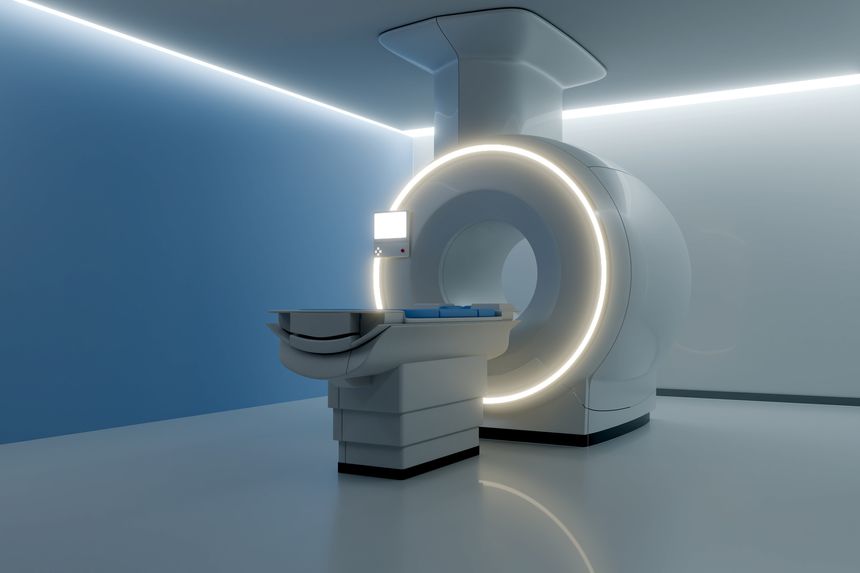
NASA’s contributions to the medical sector are considerable. One of these contributions relates to advancements in digital image processing of Magnetic Resonance Imaging (MRI) and Computed Tomography (CT) images. Both techniques can be used to generate detailed internal images of a person’s body and are important diagnostics tools for healthcare professionals.
In the 1960s, NASA pioneered the processing of digital images. Conventional camera equipment was mounted in the unmanned Ranger spacecraft to take images of the moon. The images that were returned were distorted and lopsided. NASA’s Jet Propulsion Laboratory (JPL) engineer Dr. Robert Nathan started to develop the first operational digital image processing software to solve this problem. Analogue signals were turned into digital signals, and these digital signals were fed into a computer for enhancement, resulting in the generation of sharper and more accurate images of the lunar surface. With new microchip designs, Dr. Robert Nathan used computers to correct image distortion from television pictures, removed noise and developed systems capable of handling large amounts of data at the Image Processing Laboratory (IPL), which became part of the JPL. Dr. Nathan’s work established JPL as the world leader in planetary image processing technology.
This started a steady stream of further developments in digital image processing, resulting in more sophisticated spacecrafts that transmit vast volumes of image data from distances farther and farther from Earth.
In the years that followed, JPL scientists Robert Nathan, Robert Selzer, and Kenneth Castleman used digital processing techniques to enhance electron microscope, X-ray, and light microscope images. This work sparked the use of image processing techniques in the healthcare sector. Among the medical applications derived from this technology are CT and MRI scanning. This further work established JPL as a resource in biomedical image processing.
To date, these technologies are being further developed, for example by using artificial intelligence algorithms, to further enhance the generation of medical images. The use of image processing technique in medical applications provides healthcare professionals with significant diagnostics resources.
NASA derived technologies have also contributed to numerous other medical advances. Examples include digital‑imaging breast biopsy systems adapted from Hubble Space Telescope technology, miniature foetal monitoring transmitters, fibre‑optic catheters used in laser angioplasty, LED‑based tools employed in brain cancer therapies, programmable pacemakers, and instruments used in cataract surgery.
Another of these advances relates to infrared thermometers, which are non-contact devices that measure temperature by detecting the thermal radiation—or infrared energy—emitted by an object. Every object with a temperature above absolute zero radiates this energy, and the thermometer uses a lens to focus that light onto a detector called a thermopile, which converts the heat into an electrical signal. This technology was originally refined by NASA’s JPL and its partners to measure the temperatures of distant stars, planets, and moons. Because physical probes cannot be placed on a celestial body millions of miles away, scientists developed sophisticated infrared sensors to capture the invisible glow of cosmic heat, providing a way to "touch" the universe from a distance.
Back on Earth, this space-age technology revolutionized healthcare and medical diagnostics by allowing for rapid, non-invasive vital checks. In 1990, Diatek Corporation partnered with JPL to develop a handheld infrared thermometer for use in a clinical setting, often seen as tympanic (ear) or temporal artery (forehead) scanners, to capture body heat in seconds without needing to touch mucous membranes. This has been critical for infection control, as it reduces the risk of cross-contamination between patients. Beyond the doctor's office, these sensors are found in everyday consumer devices like smartwatches that track basal body temperature or handheld "no-touch" thermometers used in homes and airports. By adapting NASA’s method of reading planetary heat, modern medicine can now identify fevers or monitor circulatory health with unprecedented speed and safety.
These developments illustrate how technologies born from space exploration have become essential to modern healthcare, enhancing both diagnostic precision and patient outcomes.


/Passle/6130aaa9400fb30e400b709a/SearchServiceImages/2026-03-24-11-50-14-823-69c27a76ee2a9b041575cf70.jpg)
/Passle/6130aaa9400fb30e400b709a/SearchServiceImages/2026-03-19-16-31-17-625-69bc24d58863aa22076d740d.jpg)
/Passle/6130aaa9400fb30e400b709a/SearchServiceImages/2026-03-11-15-55-54-366-69b1908a16246e5d37819a7a.jpg)