

In Canada, brand owners can oppose a confusingly similar trademark application by submitting a statement of opposition to the Trademarks Opposition Board (the “TMOB”). Likewise, trademark applicants can find their trademark application opposed by an existing brand owner. Following recent amendments to the Trademarks Act, a party wishing to file new evidence on an appeal of the TMOB’s decision to the Federal Court, must now seek leave to file the additional evidence. This new requirement is expected to have a meaningful impact on trademark opposition practice in Canada and was recently tested for the first time in a decision issued by the Federal Court in Products Unlimited, Inc. v. Five Seasons Comfort Limited, 2026 FC 48 (CanLII) (the “Decision”).
The approach taken by the Federal Court to the issue of leave in Products Unlimited underscores the importance of presenting a fulsome and complete evidentiary record before the TMOB. Given the relatively high bar for the granting of leave to introduce new evidence on appeal, parties would be well-advised to “put their best foot forward” before the TMOB. Further, the approach to leave set out by the Court sets the stage for complex and involved preliminary motions and the issue of leave to adduce new evidence is a threshold issue that will be closely linked to the overall merits of the case.
In this article we will discuss the approach taken by the Federal Court on the issue of leave in the Decision, and the potential impact of the change in practice on parties in opposition proceedings before the TMOB.
Background:
On April 1, 2025, long-awaited amendments to the Trademarks Act (the “Act”) came into force, including an amended subsection 56(5) of the Act, which requires leave to introduce additional evidence on appeals from decisions of the Trademarks Opposition Board (the “TMOB”). This is a material departure from past appeal practice where parties routinely filed new evidence with the Federal Court as a matter of right. Additional changes were introduced at the same time and are outlined in our article here.
The recent decision from the Federal Court in Products Unlimited, Inc. v. Five Seasons Comfort Limited, 2026 FC 48 (CanLII) (the “Decision”) is notable since it is the first Federal Court decision to consider the issue of leave to submit additional evidence on appeal. Additionally, this decision provided the Federal Court with a rare opportunity to consider issues of functionality and registrability for trademarks that comprise the positioning of a sign.
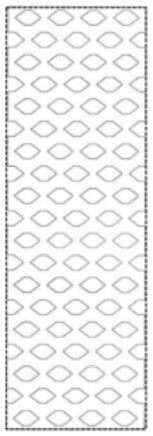
The Decision dealt with an appeal of a decision of the TMOB filed on April 2, 2025, the day after section 56(5) came into force. The TMOB refused an application for registration of the trademark FILTER DESIGN (as seen at Annex A below) consisting of the positioning of a sign in the form of a pattern of diamond-shaped apertures on the surface of air filters for paint booths (the “Mark”). The TMOB refused the application on grounds that the Applicant had not discharged its burden of showing that the diamond-shaped apertures were not dictated primarily by a utilitarian function. In rendering the decision below, the TMOB relied upon evidence tendered by the Opponent of statements from the Applicant’s website that the “unique design” of the product led to functional advantages.
In the appeal, the Appellant (the trademark Applicant) sought leave to file additional evidence, and otherwise sought to overturn the TMOB’s refusal to register the Mark. In considering the test to be applied to requests for leave, the Court reviewed the legislative context, the materiality of the evidence sought to be introduced and the specific circumstances of the case. The Court declined to adopt wholesale the test for the introduction of additional evidence set out in the Palmer decision1 of the Supreme Court of Canada. Instead, the Court outlined a discretionary and flexible test holding that in considering whether to grant leave, the Court should consider whether the interests of justice favour granting leave on the basis of all relevant factors, including:
the relevance, credibility, and admissibility of the evidence;
the materiality of the evidence;
the circumstances surrounding the delay in filing the evidence; and
whether granting leave would cause prejudice to the opposing party.
Using this framework, the Court ultimately granted leave for the Appellant to adduce new evidence addressing the statements made on the Appellant’s website to clarify that the functionality was dictated by the internal three-dimensional filter pockets, and not the surface pattern of the diamond-shaped apertures.
Leave was granted to admit the new evidence because it directly clarified the website statements relied upon by the TMOB and therefore could have materially affected the outcome. The Court also noted the procedural context of the case (the reply evidence filed late in the proceedings before the Board and the transition to the new s. 56(5) regime) and the absence of prejudice to the Respondent (as they did not participate in the appeal) in determining that admitting the new evidence ultimately served the interests of justice.
Having granted leave to introduce the new material evidence, the Court then applied the correctness standard to the issues impacted by the new evidence. The Court emphasized that the correctness standard only applies to the issues affected by the additional evidence and the palpable and overriding error standard of review would apply to the TMOB's findings that were not impacted by the newly admitted evidence. In this case, the newly admitted evidence impacted the Board’s finding in respect of the functionality of the Mark under section 12(2) of the Act, so the Court considered this issue de novo.
The Court reviewed the evidence and record and held that the functionality of the filter was provided by the structure and design of the interior pockets within the filter rather than the pattern of diamond-shaped apertures that was the subject of the trademark application. The Court held that the Mark, if registered, would not prevent another trader from using pockets or apertures in a filter. While the evidence showed there is a utilitarian function to having pockets in a paint filter the evidence read together did not show that there is a utility or function to having diamond-shaped apertures (or even pockets), or to having those diamond-shaped apertures arranged in offset columns, as set out in the Mark. The Court did note that the existence of a patent may be evidence of a utilitarian function, since the invention covered by a patent must by definition have utility. However, the Court found that the patent referred to on the Appellant’s website did not relate to the features of the Mark, i.e., the positioning or shape of the apertures, and was therefore not relevant to the issue of functionality.
The Federal Court’s decision in Products Unlimited provides helpful guidance on how the new leave requirement will operate in appeals from TMOB decisions. While the Court adopted a flexible, interests-of-justice approach to leave, the Decision makes clear that parties can no longer assume they will have a second opportunity to supplement the evidentiary record on appeal. It is now more important than ever that parties present a fulsome evidentiary record before the TMOB.
If you need any assistance with trademark opposition matters, or would like to explore how these developments could impact your trademark strategy, please contact a member of our trademarks team in Canada.
Annex A


/Passle/6130aaa9400fb30e400b709a/SearchServiceImages/2026-04-02-06-54-46-395-69ce12b6765ae4778cc07d20.jpg)
/Passle/6130aaa9400fb30e400b709a/SearchServiceImages/2026-04-01-20-57-55-819-69cd86d3705f46f2d4c868f5.jpg)
/Passle/6130aaa9400fb30e400b709a/SearchServiceImages/2026-04-01-14-51-37-115-69cd30f92f273dfa89068159.jpg)