
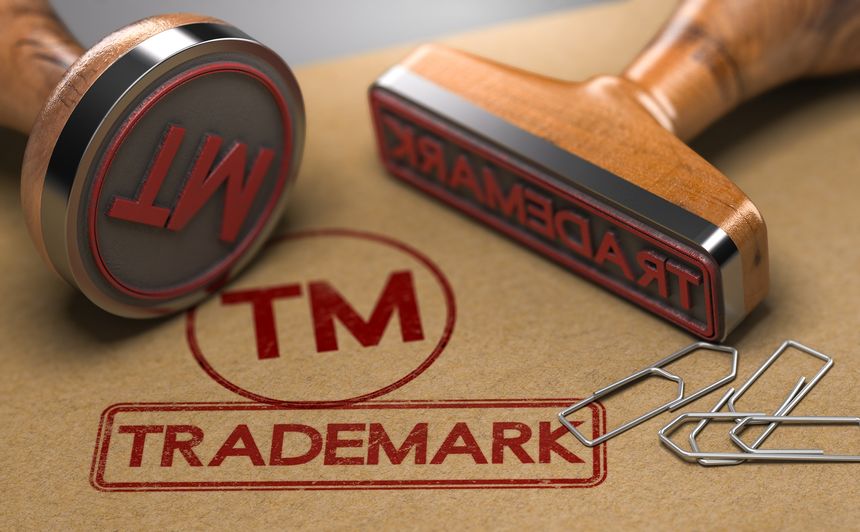
In today’s competitive marketplace, trade marks are more than just legal assets, they are the foundation of brand identity and consumer trust. Yet many assume that once a trade mark is registered, no further effort is required.
Having made the investment in protecting your key brands, your focus should then shift to ensuring that those trade marks remain enforceable, that they align with your evolving commercial interests, and most importantly, that they remain of value to the business at all.
It is therefore advisable to conduct an audit of your trade mark portfolio at least every three to five years, to ensure that your interests remain protected, and that those rights are maintained in the most cost effective way possible. There are various reasons to do so, many of which are interlinked, as discussed below.
Ensuring your rights are fully protected
Business interests evolve over time. Perhaps you are moving into new international markets, your goods or services of interest have expanded over time, or maybe your logo has been updated. Does your trade mark portfolio actually cover your current and planned interests? It is vital to ensure that this is the case, as otherwise the value of the investment you have made in building the portfolio will diminish.
In most countries, a trade mark registration provides protection for a period of ten years, with rights being maintained for a further ten-year period if renewed. Renewal deadlines must be tracked, as if you’re too late, you may lose those rights.
It’s also important to ensure that registered trade marks are actually used for the goods or services covered by them. Certain countries (like the US) require periodic submission of evidence of use, in order to maintain a registration. Even where this is not the case, once a trade mark has been registered for a certain period of time (five years in the UK), it becomes subject to use requirements. This means that if genuine use cannot be demonstrated in relation to the goods/services covered, a registration could potentially be revoked if challenged by a third party. Use would also need to be evidenced in order to rely upon an aged registration against third parties.
An audit will involve checking that renewal deadlines are being correctly monitored, and identify any gaps. For example, classes that aren’t covered by existing registrations, or countries of interest where you do not hold any rights. It should also consider whether appropriate use is being made of core marks, and whether that can be evidenced.
Aligning with business strategy
Does your portfolio reflect your current products/services and markets? If your scope of protection does not align with the overall strategy of the business, in terms of marks and classes covered, and geographic coverage, then those gaps could be costly.
At its core, successful business strategy equates to growth and profitability. One way to contribute to this is to look at whether all of your registered marks are actually needed; abandon marks that are no longer relevant, to avoid unnecessary renewal costs.
With growth comes expansion, whether geographically, in terms of product/service range, or perhaps new target markets. Seek registration of new marks to support upcoming launches/expansions.
Cost efficiency
Are you paying to renew registrations that are now redundant? There are obvious cost savings to be made by reviewing forthcoming renewals, and only maintaining marks that remain of value to you. There is an additional opportunity for cost savings in 2026, as the UKIPO will increase its fees by up to 25% from 1st April; a registration can be renewed up to six months before its deadline, meaning that marks with renewal deadlines falling up to 30th September can be renewed before the fee increase, at the current, lower cost.
A portfolio audit will also help you to optimize your filing strategies to avoid overlapping coverage, meaning ongoing cost reductions by avoiding having to renew duplicated rights.
The fee increase also applies to new applications being filed; submit any new applications before 1st April to take advantage of the lower fees.
Risk management and competitive advantage
A portfolio audit will enable you to identify various threats, and take steps to mitigate problems before they arise, for example:
- Detecting potential vulnerabilities, such as marks that could be challenged for non-use;
- Ensuring your trade marks remain enforceable in key jurisdictions;
- Identifying conflicts or infringements early to prevent costly disputes;
- Monitoring competitor filings and market trends.
All these insights can be used to inform and strengthen your IP strategy, giving you the advantage over your competitors.
Brand consistency
It is essential to ensure that your trade mark portfolio aligns with your brand architecture and messaging. Spotting inconsistencies between registered marks and actual brand usage allows you to act early and redirect as needed, to avoid problems later.
Preparing for growth and exit
The way to position your portfolio for future licensing, franchising, or international expansion is to stay ahead of change; regularly review and update your strategies wherever needed. Make sure you also ensure proper record-keeping for audits and due diligence, just in case that golden merger/acquisition presents itself.
Conclusion
Regularly reviewing your trade mark portfolio is a simple yet highly effective way to safeguard the value of your brand. A periodic audit ensures your rights remain robust, your registrations reflect current commercial priorities, and your portfolio is maintained in a cost‑efficient and strategically focused manner. By staying proactive, you not only protect your existing assets but also position your business to take full advantage of future opportunities.
The UKIPO will increase its fees by up to 25% from 1st April

/Passle/6130aaa9400fb30e400b709a/SearchServiceImages/2026-04-02-06-54-46-395-69ce12b6765ae4778cc07d20.jpg)
/Passle/6130aaa9400fb30e400b709a/SearchServiceImages/2026-04-01-20-57-55-819-69cd86d3705f46f2d4c868f5.jpg)
/Passle/6130aaa9400fb30e400b709a/SearchServiceImages/2026-04-01-14-51-37-115-69cd30f92f273dfa89068159.jpg)