
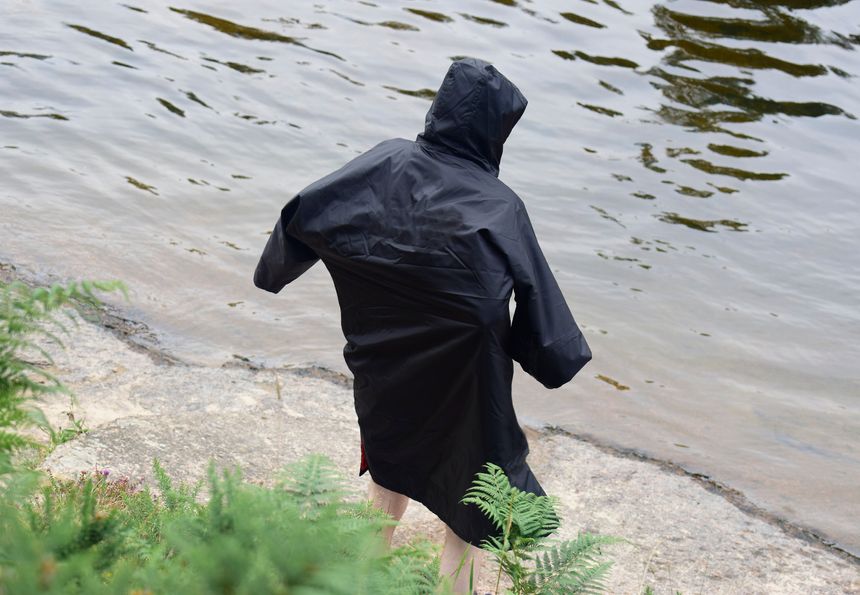
On 4 December the IPEC handed down its judgment in the case of Dryrobe Limited v Caesr Group Limited t/a D-Robe Outdoors. It relates to the trade mark infringement and passing off case brought by Dryrobe, the well known outdoor clothing manufacturer and retailer.
Dryrobe survived invalidity and revocation challenges brought by the defendant, and ultimately succeeded in their claim for trade mark infringement and passing off in respect of the defendant's use of the mark D-ROBE.
What is particularly interesting about the judgment (and what I focus on in this article) is its detailed analysis of D-Robe's counterclaim that the DRYROBE trade marks should be revoked as they had become generic pursuant to s46(1)(c) Trade Marks Act 1994 (TMA).
s46(1)(c) TMA states that the registration of a trade mark may be revoked on grounds that “in consequence of acts or inactivity of the proprietor, it has become the common name in the trade for a product or service what which it is registered.” It covers a situation where a previously distinctive trade mark, which has functioned as an indication of origin, has become a generic name and therefore ceased to perform that function.
D-Robe (the defendant) argued that the brand DRYROBE had become synonymous with a category term for the products in question (i.e. it had become the common name for changing robe products). The Court accepted the assertion that, because of the descriptive nature of the DRYROBE trade marks, the claimant had a heavier burden to take steps to prevent it becoming a common name than in the case of someone who registers an inherently distinctive mark (as per the judgment from Richard Arnold QC (as he then was) in Hormel Foods v Antilles [2005] EWHC 13 (Ch)). However, the Court felt that Dryrobe had discharged its burden, and therefore the DRYROBE marks had not become generic.
This was due to the quite significant steps Dryrobe had been taking to educate the public/third parties and police its marks. This is where it becomes extremely useful for brands who may be in a similar position regarding potentially generic marks to be able to consider the steps Dryrobe had taken and compare them to their own strategy.
The steps Dryrobe had taken to combat generic use of ‘dry robe’ and ‘dryrobe’, which played a pivotal role in their ultimate success in this case included (see paras [42]-[50] of Melissa Clarke J's judgment):
- Budgeting for legal work and online brand protection;
- Writing to/communicating with third parties who described their products as ‘dryrobes’/'dry robes', notifying them of the existence of the trade marks and, from 2021, specifically suggesting they describe their products as changing robes;
- Taking advice from a marketing consultant and working with an IP solicitor to address the risk of genericisation by:
- Posting on social media “no substitutes” videos explaining only a genuine Dryrobe from the Claimant could be called a Dryrobe;
- Creating posts demonstrating the Dryrobe's superior quality and performance;
- Creating a section on the Claimant's website explaining how to use the term DRYROBE and asking others to use the ® sign to highlight it is a registered trade mark;
- Instructing the social media team to actively search on social media for ‘dryrobe’ and ‘dryrobe on a weekly basis and, if found in relation to third party products, contact the user in a friendly and informal way to ask them to remove the reference and use ’changing robes' instead;
- Investing in further legal action, where appropriate, if informal action did not resolve the issue etc.
The Claimant also had extensive documentary evidence relating to these activities, including for example, records of all social media posts which it found and objected to from December 2020.
We rarely get jurisprudence on genericism where we can clearly see the exact steps a company has taken to discharge the burden of ensuring its trade marks do not fall into this trap and become liable for revocation. All brands who have trade marks that are at risk of becoming the accepted and commonly used category term for an item would do well to consider this, especially if their trade mark is of low distinctiveness.
You can find the entire judgment here. Please do reach out if you require advice on this topic.

/Passle/6130aaa9400fb30e400b709a/SearchServiceImages/2026-04-09-14-16-49-395-69d7b4d18614c88cffdc5368.jpg)
/Passle/6130aaa9400fb30e400b709a/SearchServiceImages/2026-04-09-12-38-49-770-69d79dd92952f1d4f47109a1.jpg)
/Passle/6130aaa9400fb30e400b709a/MediaLibrary/Images/2026-04-07-13-45-21-168-69d50a71e50d418cb2c70c65.png)